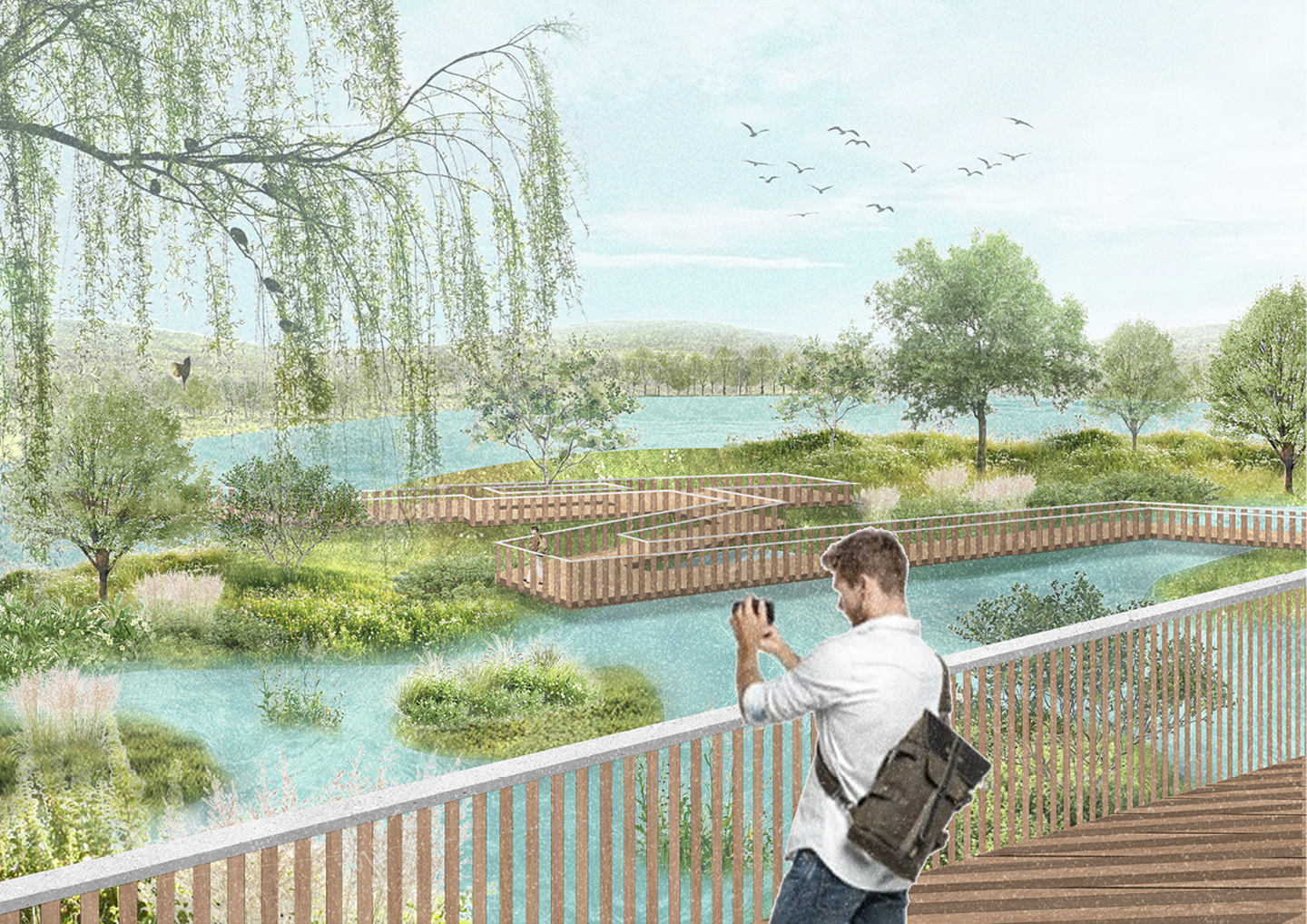
The MLA continues to consolidate its presence within Infrastructure Space, embracing the multi-scalar, data-driven design process, distinctive to the atelier. The foregrounding of environmental legislation in the location analysis incentivised a highly landscape-led focus for the whole atelier and gave MLA students a leading role in the inter-disciplinary group investigations.
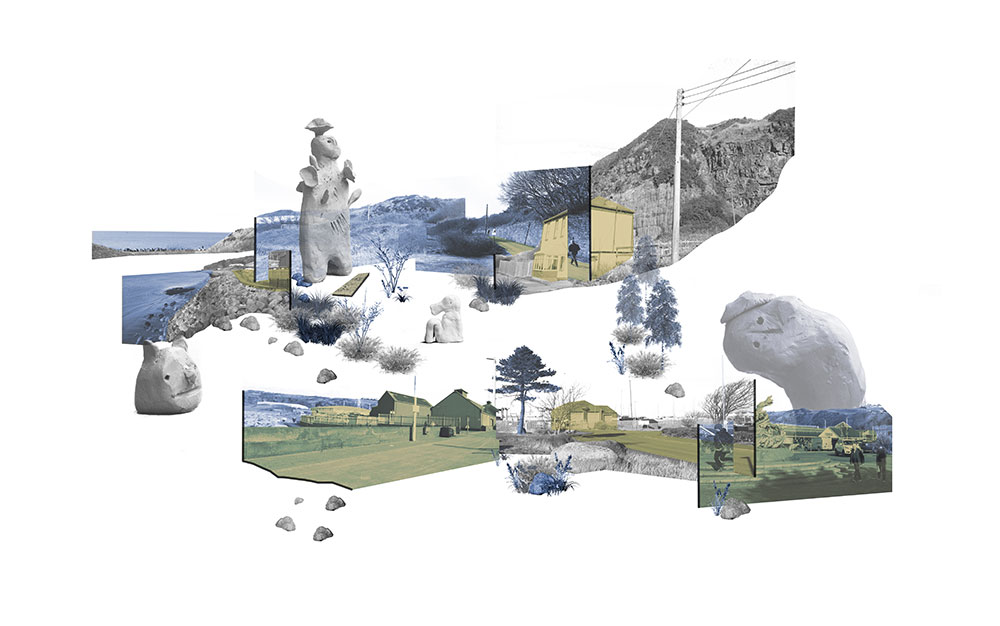
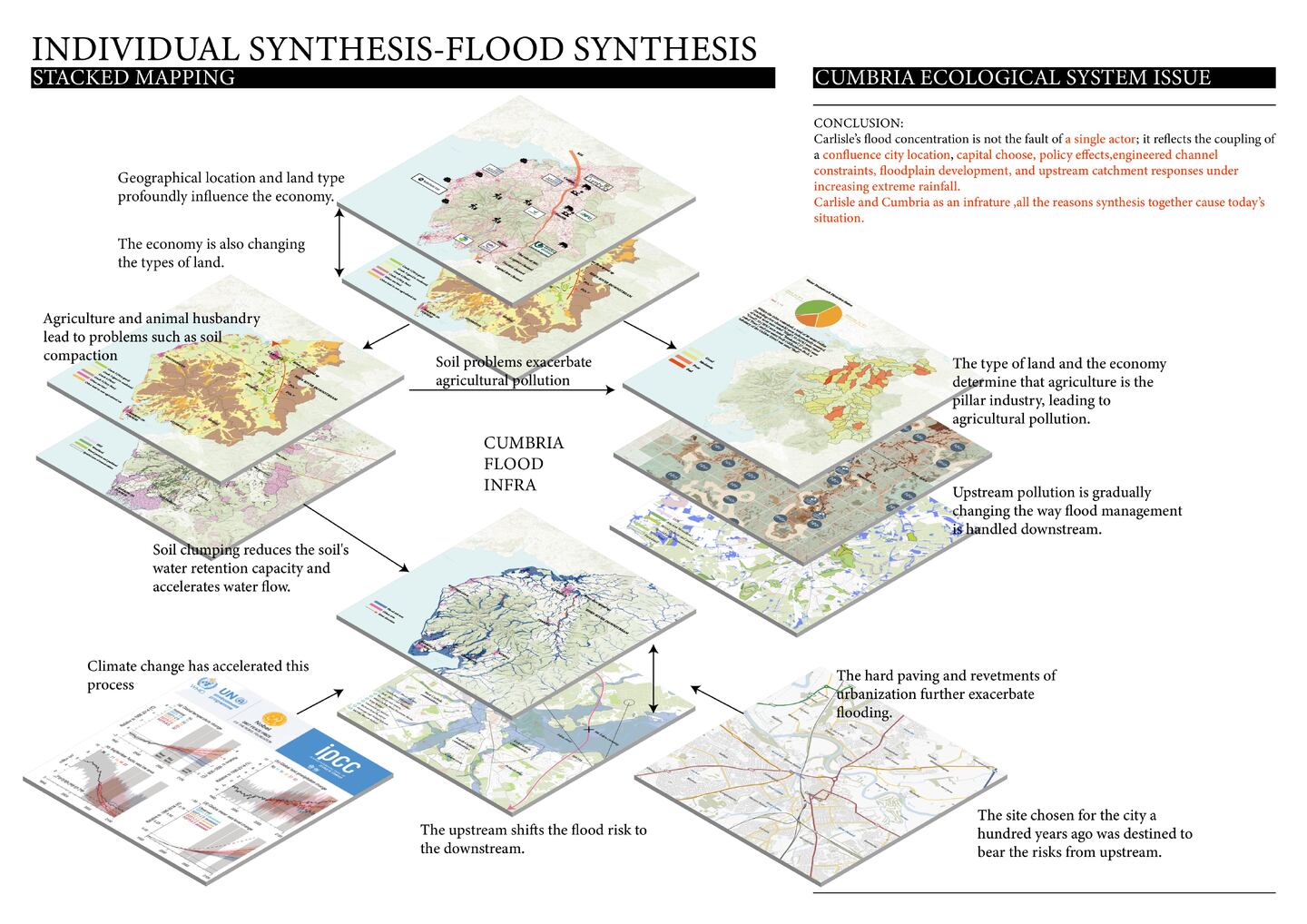
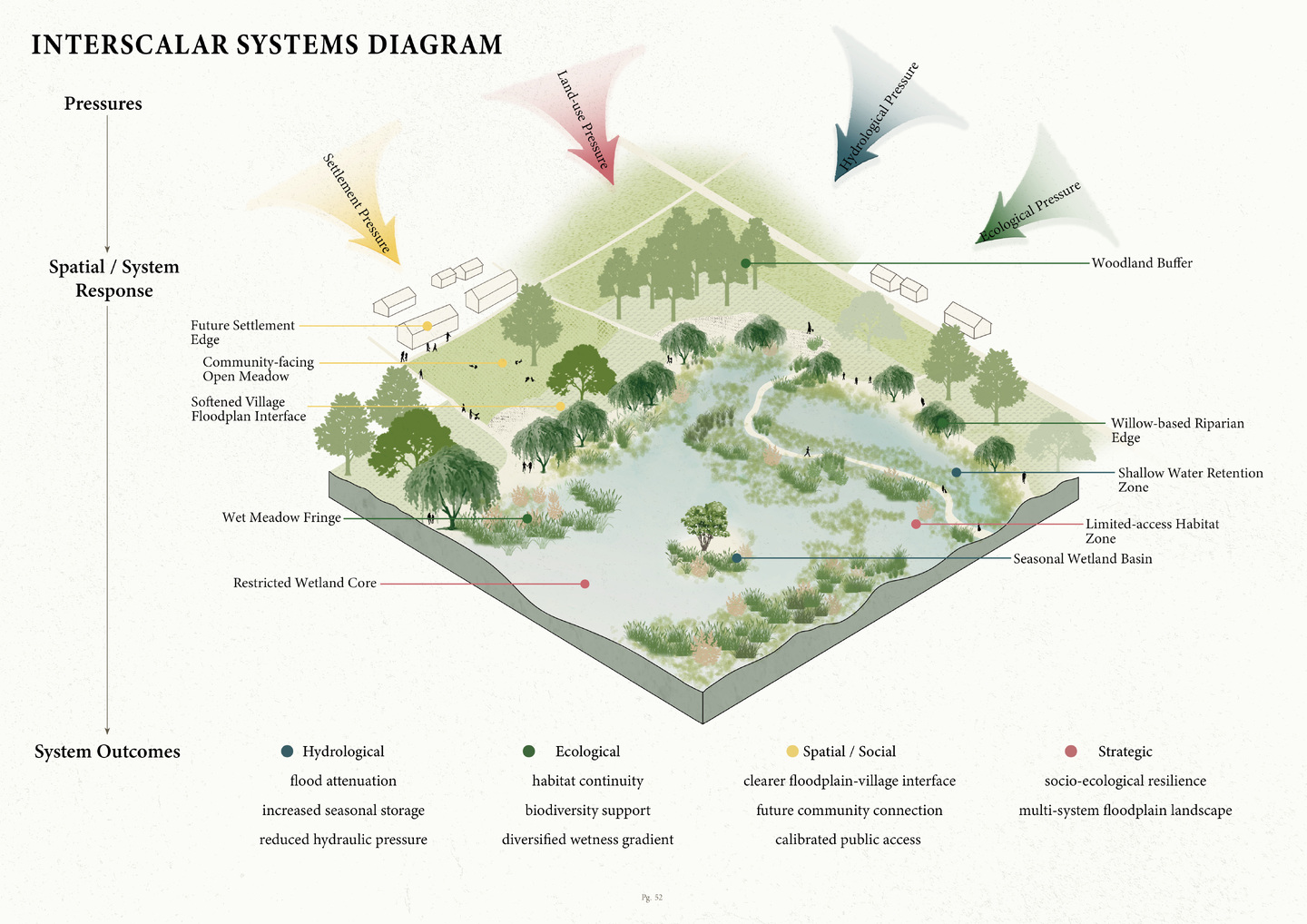
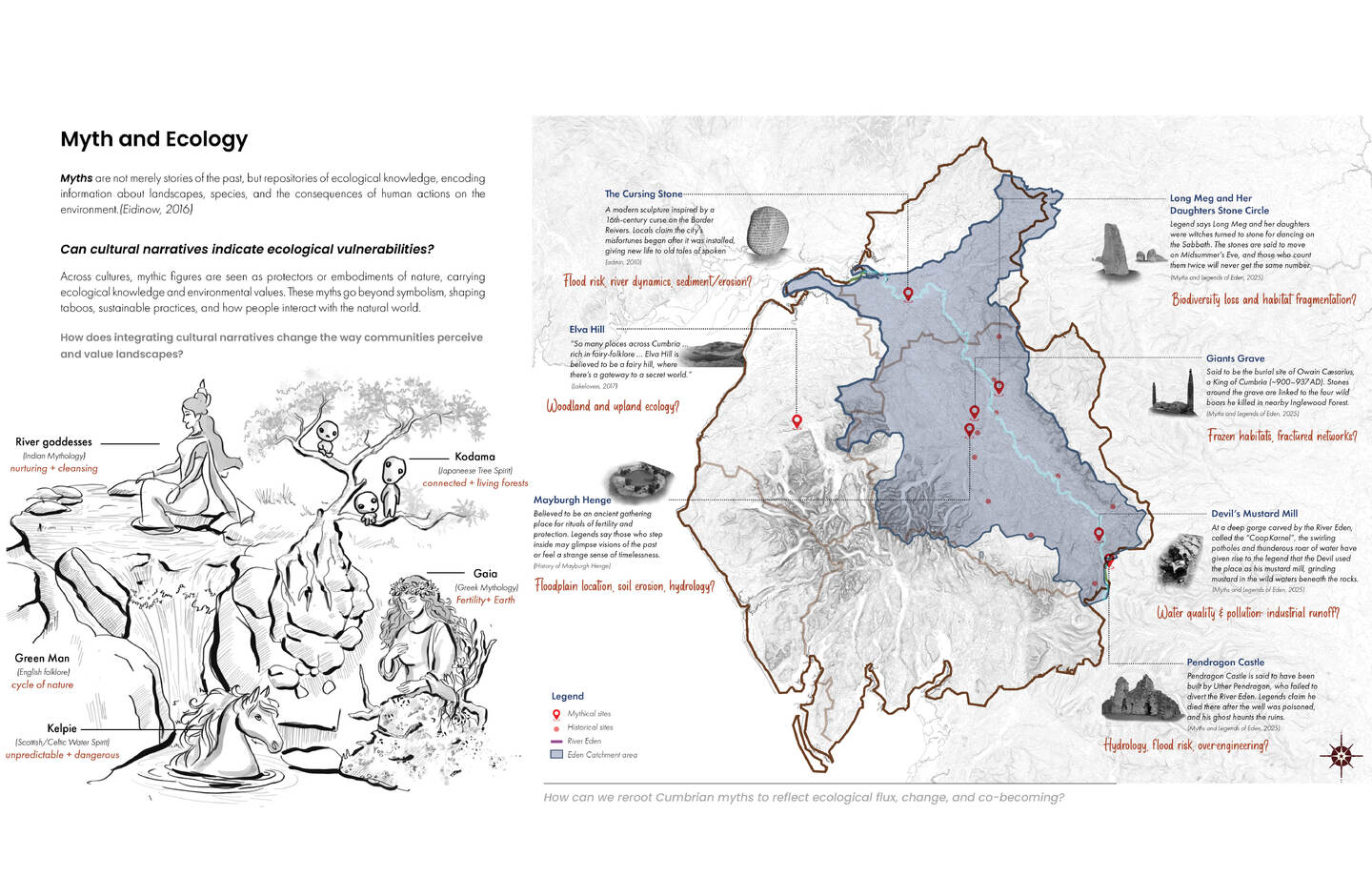
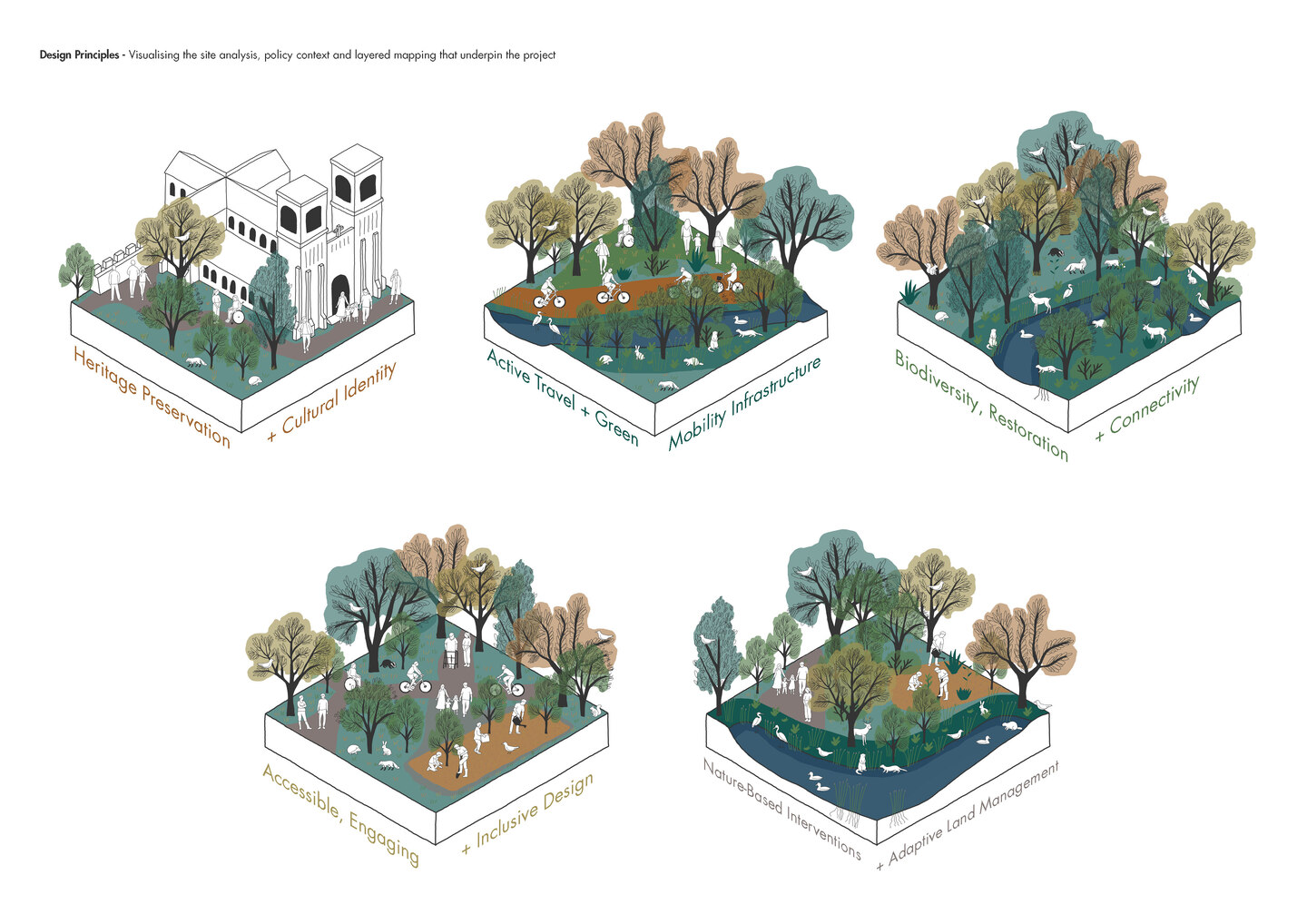
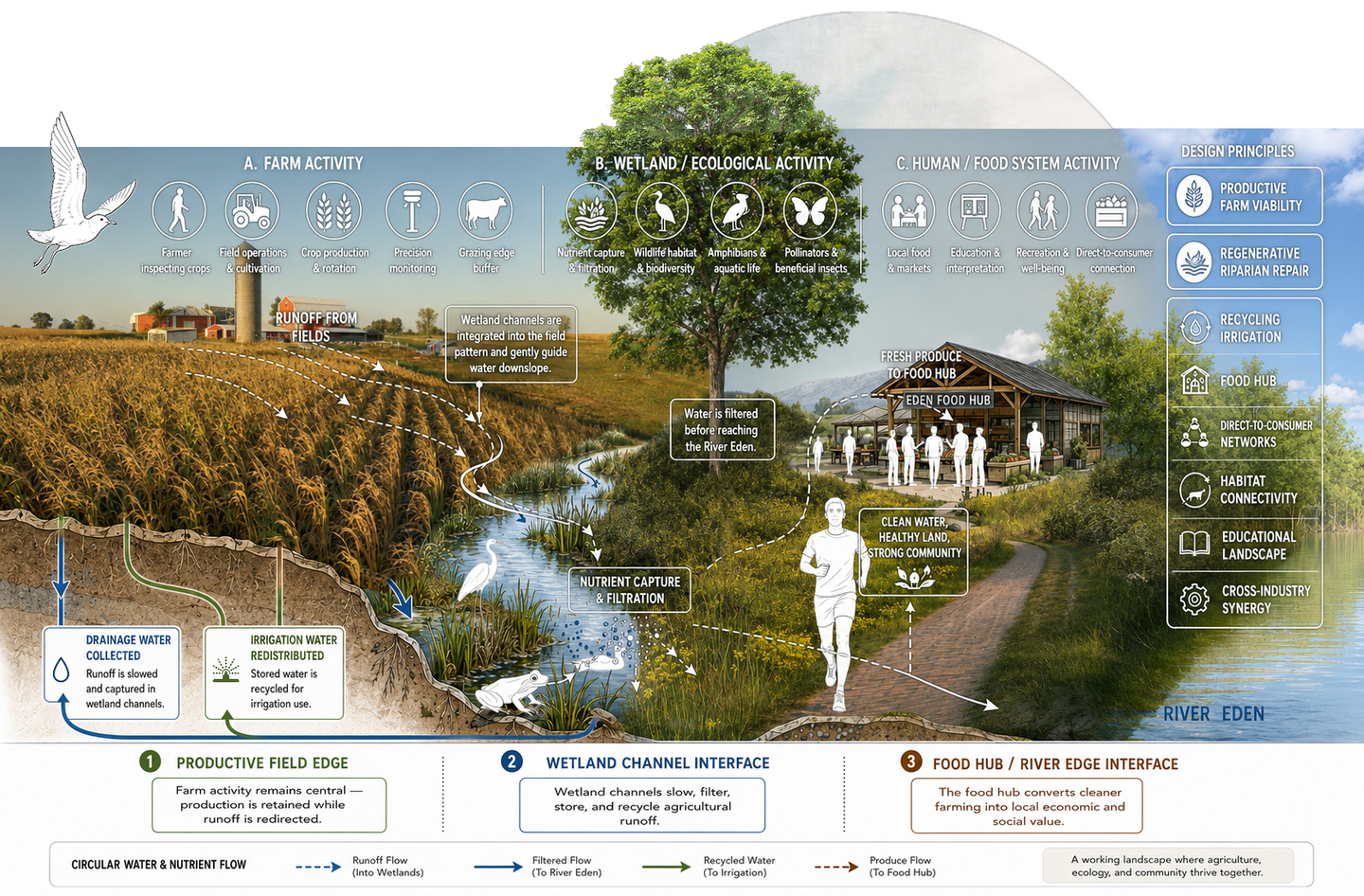
Focussing on the area around Carlisle and the River Eden, the brief provided a vehicle for investigations into the complex inter-relationships between social exclusion, flood risk, contemporary agriculture and the biodiversity crisis. Multi-faceted research methods included: thematic data mapping; stakeholder workshops; scenario building; and, AI experimentation, enabling students to develop a diverse range of socially and ecologically responsive proposals. The interactive exhibitions and stakeholder events ensured designs were both speculative and grounded in real-world contexts.
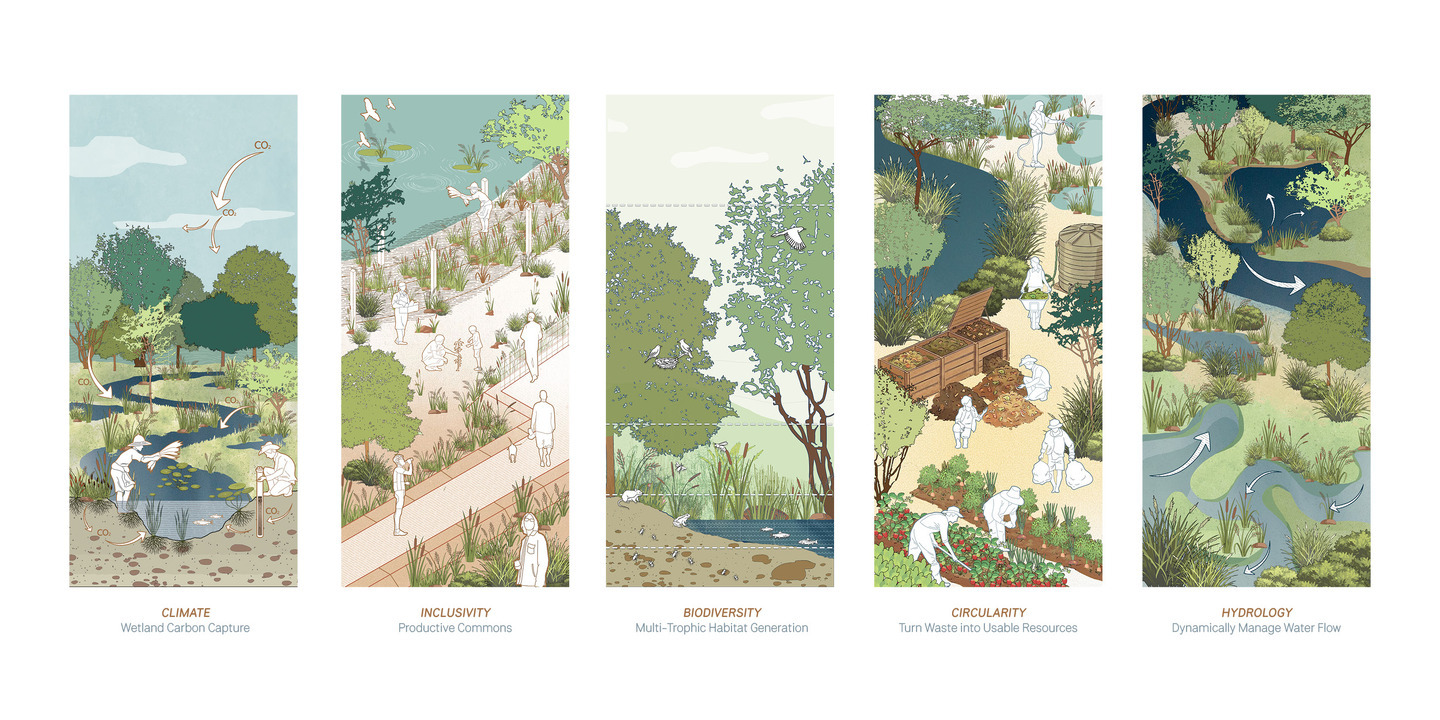
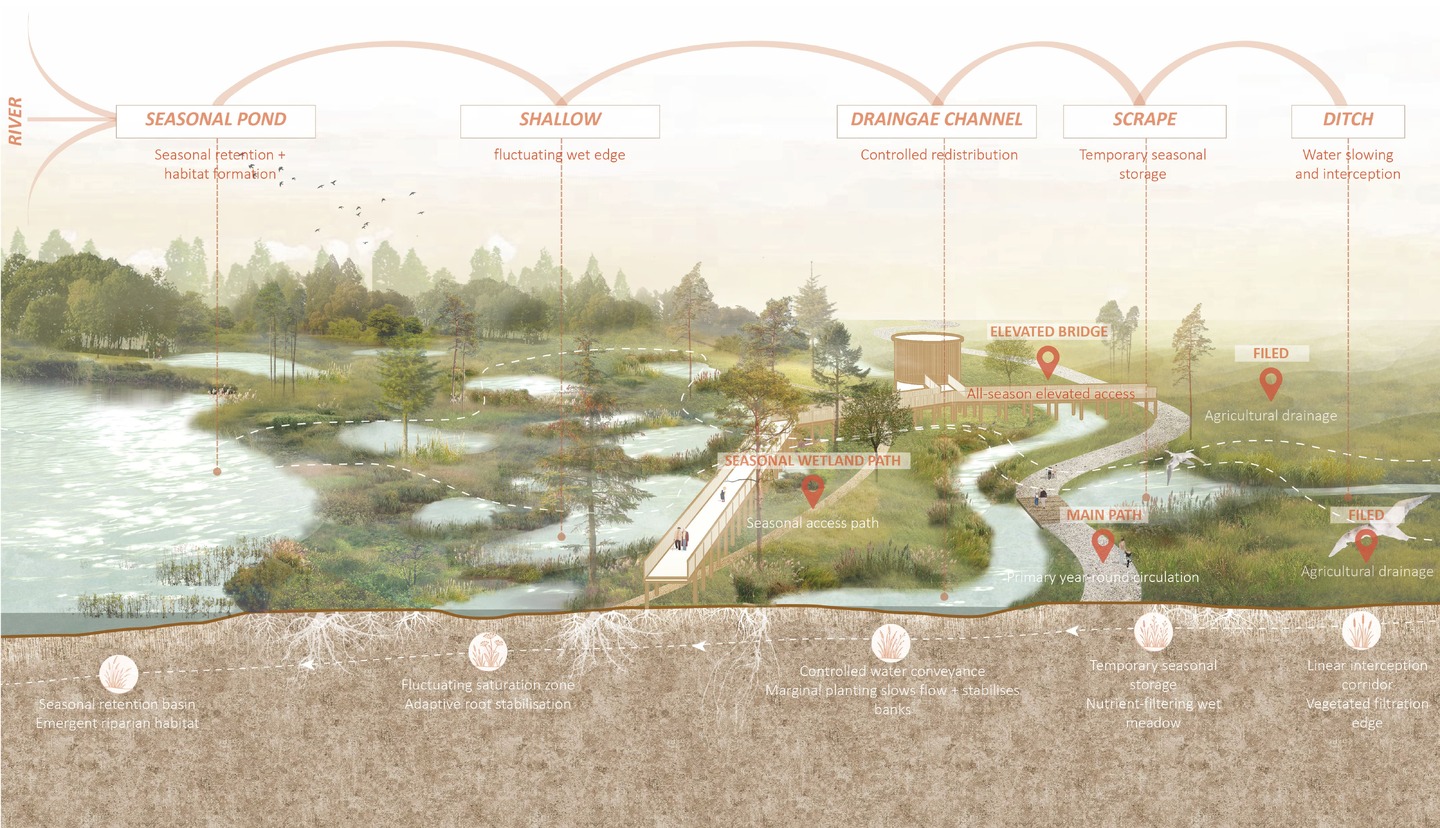
The work has revealed the potential of landscape and ecological infrastructures to become catalysts for the conceptualisation of alternative futures, capable of reshaping territorial boundaries and enhancing the resilience and regenerative potential of landscapes.
The students’ work provides innovative insights and envisions diverse alternative future landscapes, with the potential to generate meaningful impacts for communities and ecologies. Thank you to our dedicated staff, experts, and stakeholders for your unwavering support, and to our students for your ambition and talent.