

BA1 Principles of Technology: Environmental and Structural Intuition
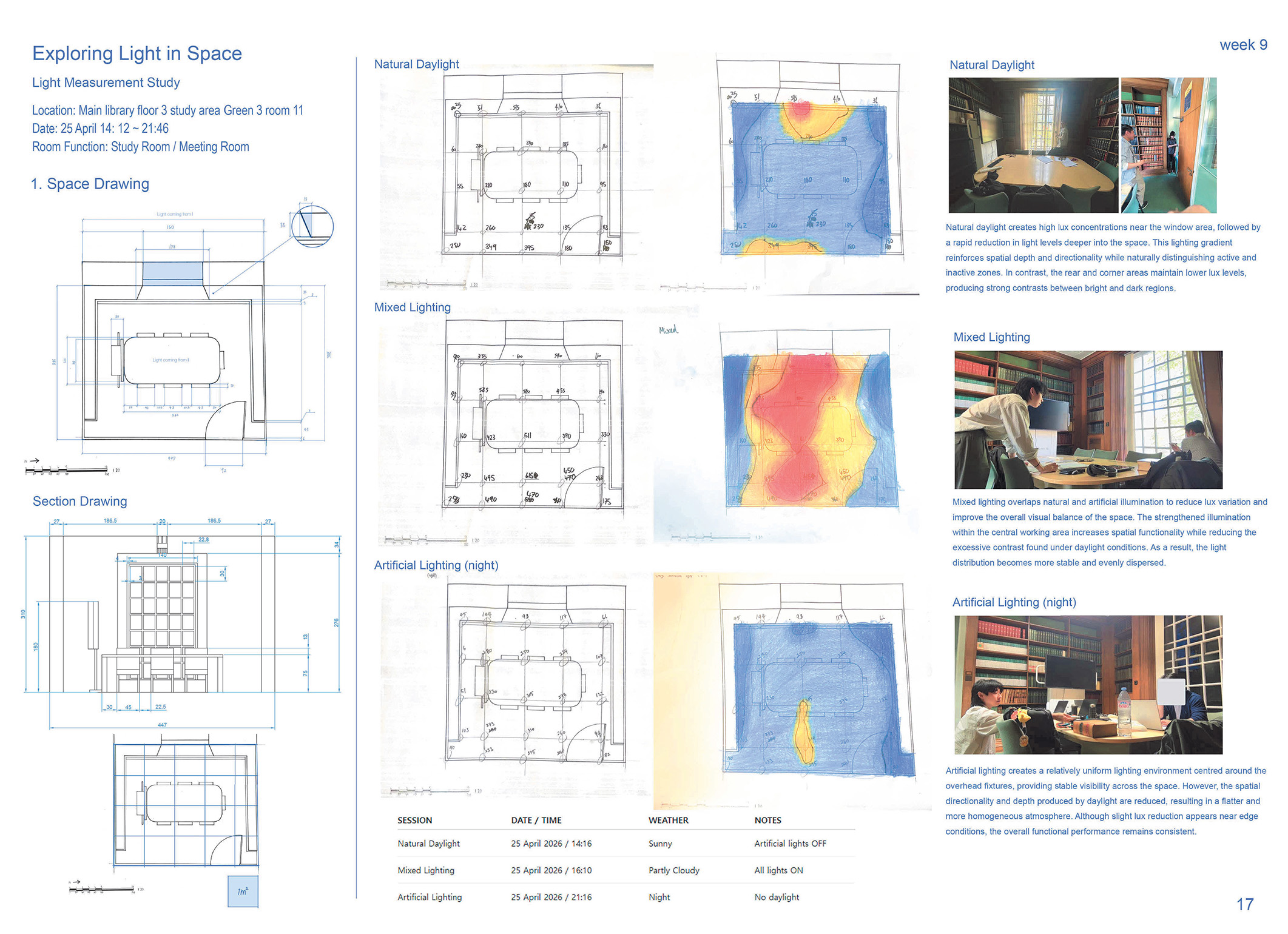
During their first year, our students embarked on a rigorous, hands-on journey to build their foundational "Environmental and Structural Intuition." Moving away from computer screens and abstract theory, this module challenged students to use the physical environment of the city as their primary laboratory. The curriculum was designed to bridge the gap between subjective human comfort and objective performance data. Equipped with digital sensors, students mapped the invisible forces acting upon architectural spaces by measuring temperature, humidity, and lux levels to critically evaluate industry standards against real-world human experience.
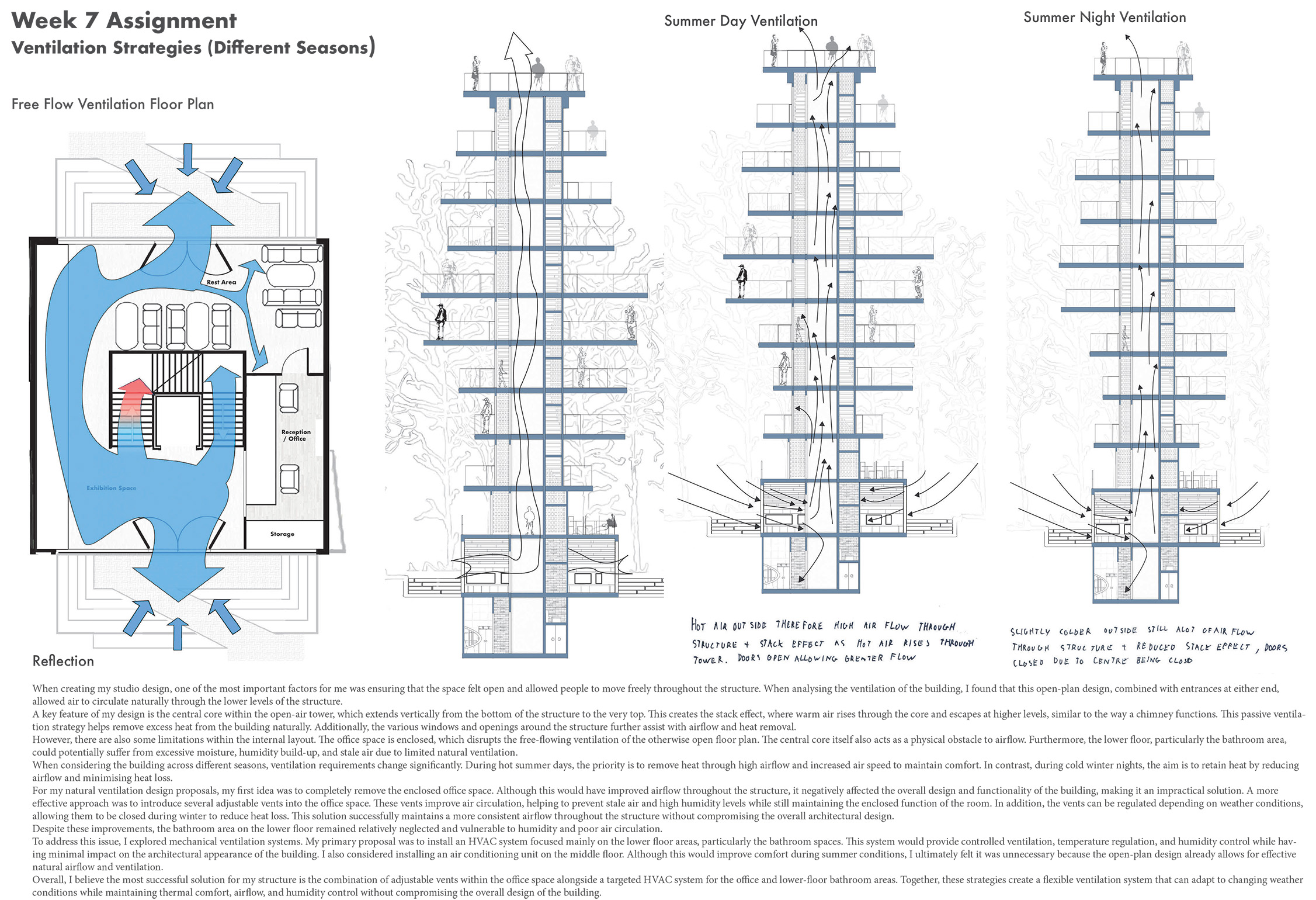
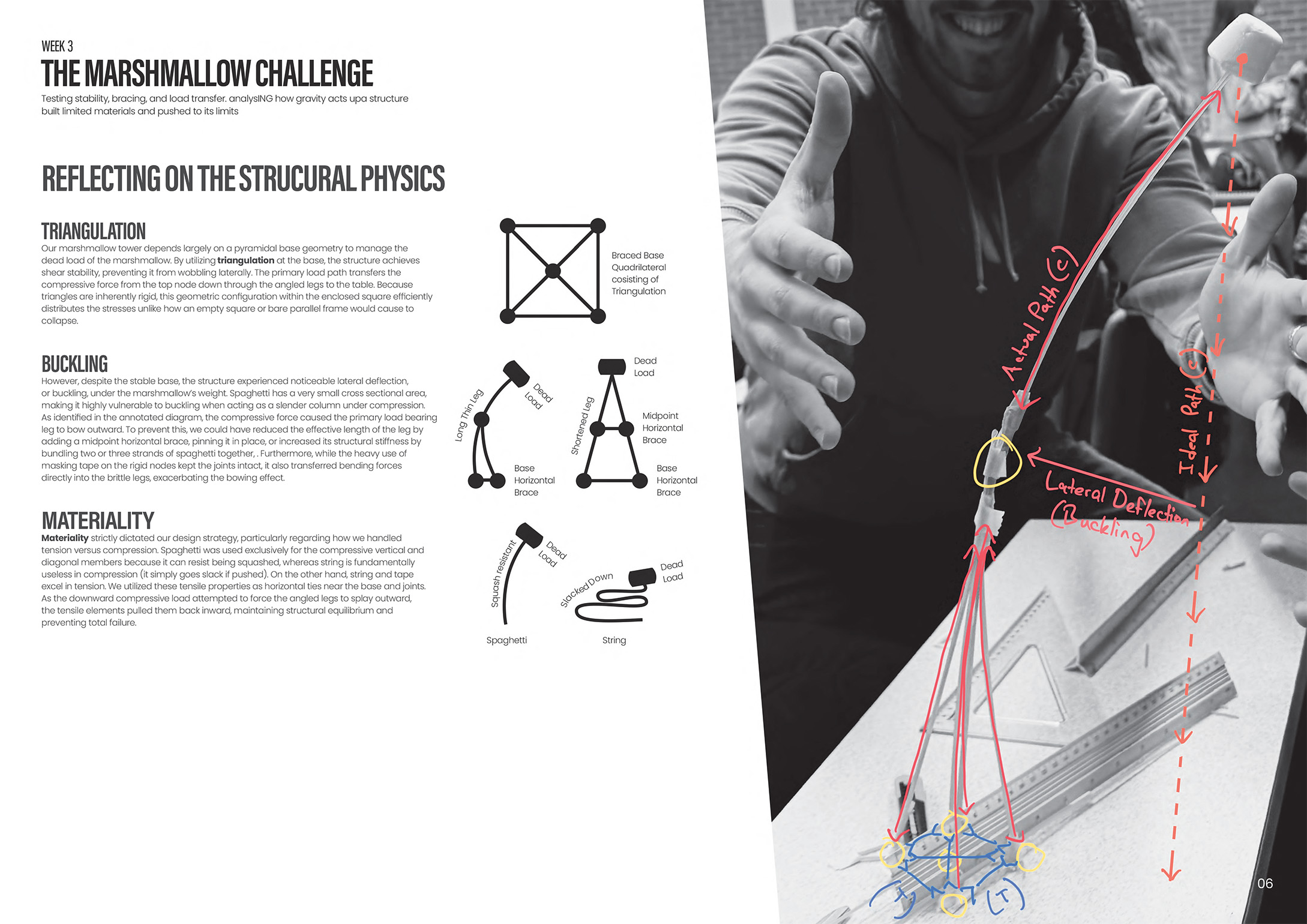
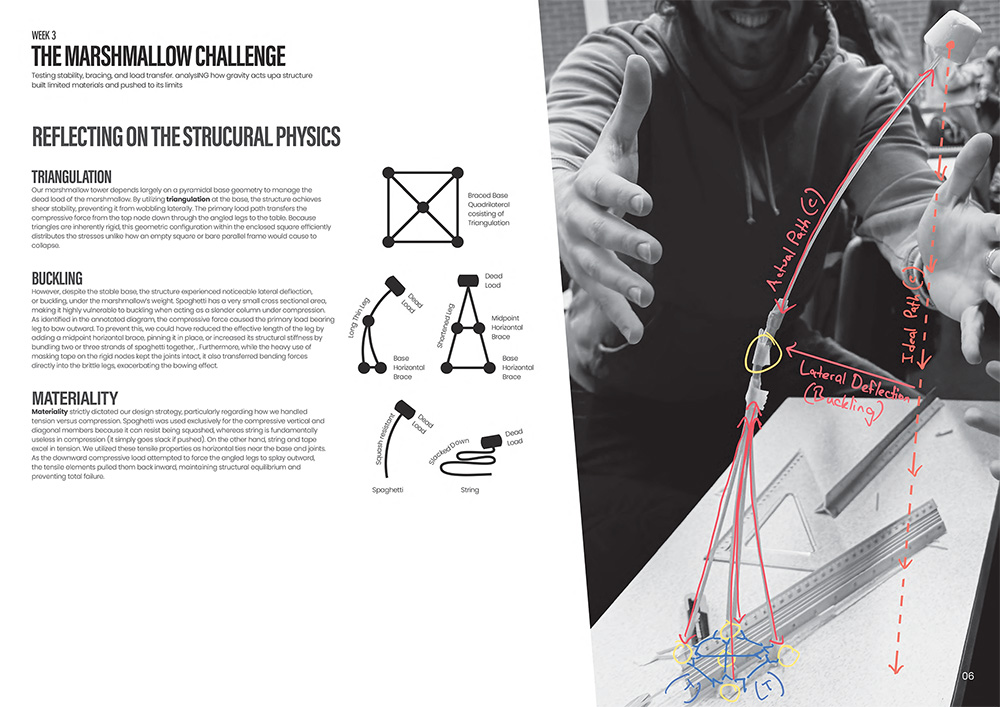
Through a series of tactile and interactive workshops, the cohort explored the fundamental physics of construction. They engaged in physical model-making to trace gravity load paths, analyse structural failures, and understand the core principles of compression and tension. As the module progressed, students applied this empirical knowledge directly to their studio designs. They iteratively tested passive ventilation strategies, calculated the thermal performance of building envelopes, and optimised spatial layouts for natural daylighting.
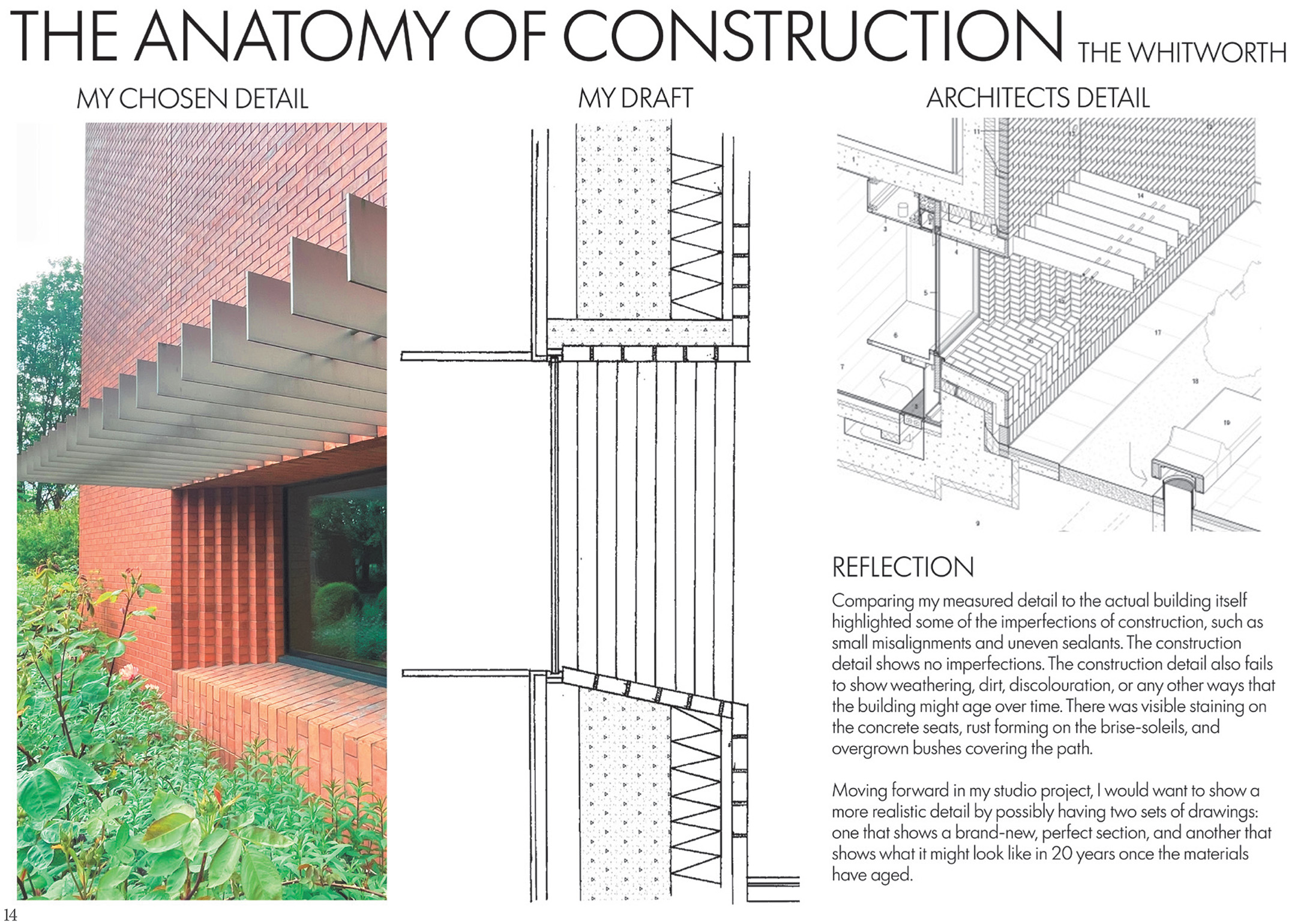
Finally, students transitioned from environmental physics to tectonic reality, learning the meticulous graphic language of architectural detailing. By conducting measured surveys of existing buildings and emulating the drafting conventions of architectural masters, they learned how to translate complex material assemblies into clear, professional construction drawings. The projects presented here reflect this vital first step in their architectural education, demonstrating how our BA1 students successfully learned to observe, quantify, and graphically communicate the physical realities of the built environment.