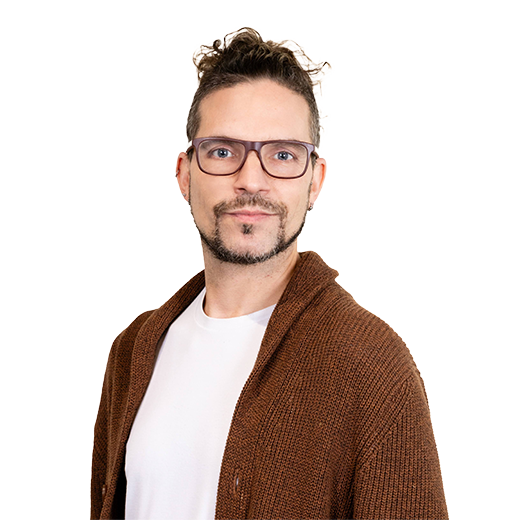


Alberto V. Yebenes is an architect, educator and specialist in adaptive reuse, with more than twenty years of experience across architectural practice and higher education in Spain and the United Kingdom. He graduated in Architecture from ETSAM, Universidad Politecnica de Madrid, in 2004, specialising in tectonics and structures, and completed postgraduate study in environmental urban design and ecology in 2006.
His early professional work in Spain focused on heritage, conservation and the transformation of existing buildings. Key projects include the Royal Mint of Segovia, where a fifteenth-century industrial complex was adapted as a museum and cultural centre, as well as work on San Francisco el Grande and the Beata María Ana Hospital in Madrid. Since moving into UK practice in 2014, he has worked on major cultural, commercial and urban-regeneration projects with Hodder and Partners and tp bennett. As Project Director he led or co-led adaptive-reuse and sustainable-development projects including Windmill Green in Manchester, N1 City Square and 11–12 Wellington Place in Leeds, and RHS Garden Bridgewater in Worsley.
Projects to which Alberto made a significant design and leadership contribution have received national and international recognition from organisations including RIBA and RIBA North West, the Manchester Society of Architects, the British Council for Offices and the Chicago Athenaeum. They have also received recognition through the Mixology Awards, Structural Timber Awards, sustainable-development awards and the Scott Brownrigg Award for Sustainable Development. His work has been published by the Architects’ Journal, Dezeen, and Interiors, amongst others.
Alberto is a Senior Lecturer in Architecture and Adaptive Reuse at Manchester School of Architecture and Deputy Programme Leader for BA2 and Continuity Atelier lead for BA3. His teaching connects design theory, technology, sustainability and professional practice through live projects and buildings he has helped to deliver. His international academic activity includes collaborations with ETSAM, Roma Tre University, Universidade Lusíada Porto, Carleton University and IE University, alongside invited teaching, doctoral supervision, conference presentations, study visits, Technology and Humanities. He was shortlisted for Manchester Metropolitan University Teacher of the Year in 2024.
A qualified Mental Health First Aider, Alberto also contributes to employability, mentoring, inclusion and student wellbeing. His wider civic engagement includes voluntary work with Chorlton Good Neighbours and community and cultural initiatives in South Manchester, reflecting a sustained commitment to the social value of architecture and education.
Teaching
I teach across undergraduate and postgraduate architecture, including Second Year BA and the MA in Architecture and Adaptive Reuse. My teaching integrates design, technology, and professional practice, with a particular focus on working with existing buildings and complex urban contexts.
I supervise design and research projects that engage with adaptive reuse, sustainability, heritage, and adaptable architecture, supporting students from diverse academic and cultural backgrounds. My approach combines practice-based learning, fieldwork, and reflective methods, and places strong emphasis on employability, wellbeing, and inclusive studio cultures.
I also support students beyond formal supervision through portfolio development, career guidance, and mentoring, and regularly work with alumni, practitioners, and civic partners to connect teaching with professional and community contexts.
I will continue the secondary supervision of a visiting PHD student from Rome looking at adaptive reuse of urban structures started in the Spring 2026
Postgraduate supervision
PHD Supervision - Carolina Accolla ( Dipartimento di Architettura - Università degli Studi Roma Tre)
During her research visit at the Manchester School of Architecture (March–July 2026), Ms Carolina Accola will be supervised within the field of adaptive reuse and urban regeneration, with a focus on the transformation of disused industrial buildings. The supervision will support her investigation into the relationship between the morphological and spatial characteristics of former industrial structures and their potential for adaptive reuse, building on critical reviews of industrial heritage, post-industrial landscapes, and evolving concepts of monument, heritage, and resource. This supervision forms part of an ongoing academic collaboration between the Manchester School of Architecture and Roma Tre University, developed through reciprocal institutional visits and lecture exchanges, and aimed at strengthening research and pedagogical cooperation in adaptive reuse.
Press and media appearances and contributions
https://heyzine.com/flip-book/96433a3f38.html