
The Moston Food Commons
The Moston Food Commons centres social, ecological and economical justice for all through cooking and celebrating African & Caribbean cuisine in a reimagined community kitchen. A circular food strategy is enabled on site through allotments, food waste collection and composting, enabling Moston residents to learn horticulture skills, along with cookery skills. Designed to reduce health inequalities and dismantle systemic barriers in the way of minorities, the Food Commons is accessible to all, regardless of age, ability, ethnicity and gender, allowing everybody access to affordable, culturally appropriate foods. The mass timber Glulam-CLT hybrid structure is the base for larch rainscreen cladding, repurposed litter & fabric insulation, and photovoltaic panels on a sawtooth roof.
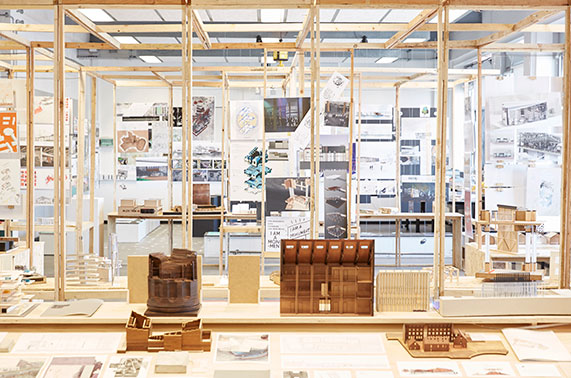
A particular focus in the technical design of the Food Commons is the repurposed waste insulation. Through the fragment detail model, I prototyped the process and outcome of using litter and discarded fabric as insulation within the building envelope. I ensured energy loss was mitigated by increasing the insulation thickness to 320mm, replicating how the Moston community would collect and reuse waste within the building's construction. This, not only, cleans up the discarded plastics on site and reduces landfill waste, but the Food Commons remains an energy efficient building, even with unconventional insulation.
Through a passive design, the Commons prioritises the Moston community and its ecology, working with a bottom-up approach to social wellbeing, and providing an urban space for sharing food, skills, and joy.
