
The Stonemason's Renaissance
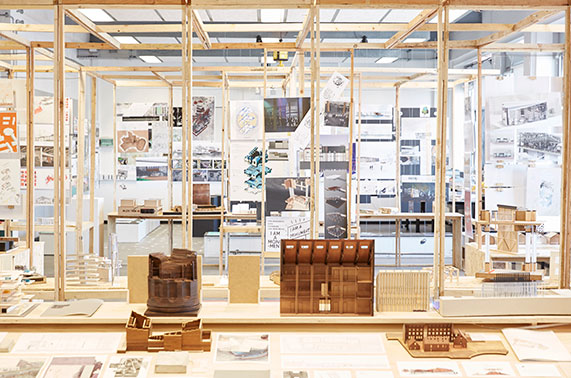
The Stonemason’s Renaissance is a speculative architectural proposal exploring how heritage, craft, and contemporary stone construction can operate as active civic infrastructure within post-industrial towns. Set in Crewe, a town shaped by railway engineering and collective labour, the project responds to the decline of local identity, fragmented public space, and the disappearance of skilled craftsmanship by proposing a new centre grounded in making, learning, and repair.
Rather than treating heritage as static preservation, the project reframes it as a living and productive system. Through workshops, apprenticeships, exhibition spaces, archives, and public landscapes, the proposal reconnects material culture with education, employment, and community participation. The project draws upon the atelier ethos of “Make, Do, Mend,” positioning architecture as both a physical and cultural act capable of supporting long-term social and economic resilience.
Materially, the proposal investigates stone as both a tectonic and symbolic medium. Research into ancient monolithic construction, contemporary European stonemasonry, and circular material lifecycles informed the development of a low-carbon hybrid stone system focused on durability, repairability, and embodied cultural memory. Passive environmental strategies, adaptive reuse, and deconstruction-led thinking further position the building as a long-term environmental and civic framework rather than a finished object.
Ultimately, Crewe Stone and Heritage Centre asks how architecture can give heritage agency within the future economy of a town, transforming making into a visible, collective, and empowering civic experience.
