
9-5[24/7] Birley Industry Hub

9-5[24/7]: Birley Industry Hub explores how architecture can transform mentorship from an institutional obligation into a visible, accessible, and citywide cultural practice. Situated at Manchester Metropolitan University’s Birley Campus in Hulme, the project responds to the growing disconnect between higher education, professional industries, and surrounding communities. Rather than treating mentorship as a closed academic system, the proposal reframes it as an open civic infrastructure embedded within the everyday life of the city.

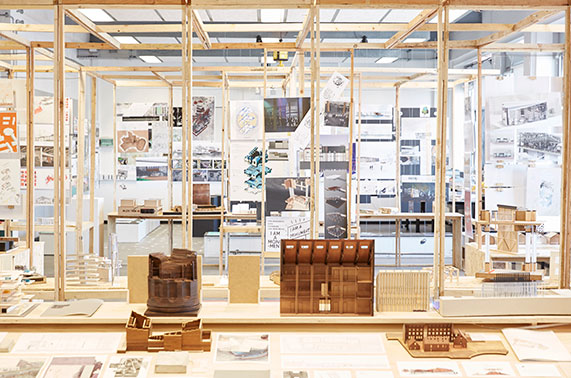
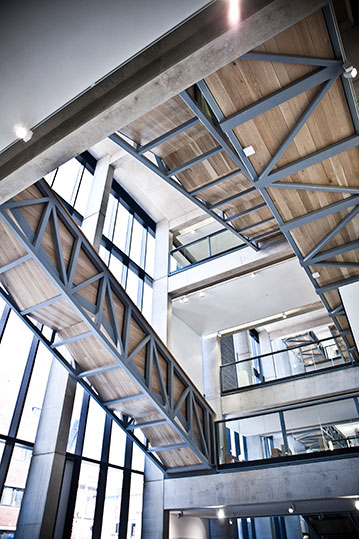
The scheme establishes a new industry hub that combines collaborative workspaces, mentoring studios, exhibition environments, fabrication facilities, and public social spaces within a flexible architectural framework designed to evolve over time. A network of pavilions positioned throughout Manchester’s major industry districts extends the project beyond the campus, encouraging professionals to engage directly with students and emerging creatives. At Birley Campus, the proposal reconnects fragmented areas divided by Princess Parkway through new bridge infrastructure, ecological landscapes, and public routes that improve accessibility and social interaction.

Influenced by the CPU Atelier’s focus on systems thinking, complexity, and computation, the project explores how digital design tools can inform responsive architectural environments. Using Rhino and Grasshopper, a series of parametric studies were undertaken to develop an adaptive kinetic façade system capable of responding to changing environmental conditions throughout the day and across seasons. Solar data and sun-path analysis informed the behaviour of modular façade panels, allowing them to adjust shading levels in response to solar exposure. Beyond improving thermal comfort and reducing solar gain, the kinetic façade creates a dynamic architectural identity that visibly communicates environmental performance. Through computational design methods, adaptive environmental systems, and socially sustainable planning strategies, the project investigates how architecture can support resilient learning ecosystems while redefining the university campus as an active participant within Manchester’s wider cultural, economic, and professional networks.