
Uncrypted: Rethinking Human Exclusion Zones
This project has responded to the architectural notion of human exclusion zones through developing a new typology of critical infrastructure. The Mancunian way is typical of exclusionary space which is designed for the 20th century modern machine (the consumer car) creating an imposing structure on the urban landscape that is difficult for humans to navigate. The data centre is the 21st century equivalent, architecturally imposing infrastructure that provides consumers access to LLM’s (AI). The project proposes a challenge to this impenetrable architecture of infrastructure.
The project proposes that infrastructure design should place people at the centre of architectural space. At its core, the scheme is a community library supported by critical digital infrastructure. Excess heat generated by the data cabinets is captured through an underfloor water-heating system, which provides warmth to the central library spaces. In doing so, the building acts as a community heat bank, helping to protect vulnerable local residents from heat poverty.
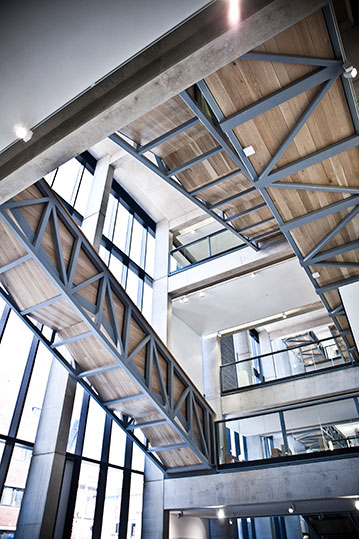
The project prioritises net-zero carbon principles across the entire life cycle of the building, from construction and future renovation to eventual dismantling and reuse. Its technical systems and structural components have been designed for disassembly, allowing materials and building elements to be recovered and reused rather than discarded.
The architectural design also aims to open up what has traditionally been an exclusionary infrastructural zone. A translucent façade creates visual connection and transparency, encouraging engagement between the building, the surrounding city, and those passing along the Mancunian Way.
