
Ministry of Alternative Design

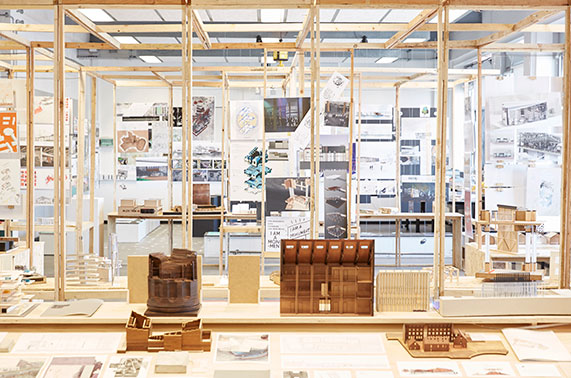
This portfolio, Ministry of Alternative Design, reclaims Mancunian Way as a hyper-sustainable material stewardship network that critiques the construction industry’s dependence on extraction, demolition, speed, and short-term economic growth. Positioned against the culture of overproduction and greenwashing embedded within contemporary architecture, the project challenges both industry and academia for continuing to normalise environmentally destructive practices under the guise of innovation and sustainability.

Grounded in ethical frameworks such as A Moratorium on New Construction by Charlotte Malterre-Barthes and the principles explored within Architecture Without Extraction by Zosia Dzierżawska, the portfolio argues for a stricter architectural responsibility centred on restraint, repair, and long-term stewardship. Rather than proposing architecture as an endlessly consumptive act, the project questions whether building should occur at all unless genuinely necessary. This ethical position became fundamental to the methodology of the portfolio, informing decisions around scale, material use, construction, and programme.

Influenced by Alison Smithson’s concept of Mat Architecture from the 1970s, the proposal adopts ideas of adaptability, collective participation, layered infrastructure, and long-term growth over isolated architectural objects. Instead of demolishing Mancunian Way, the existing infrastructure is transformed into a productive landscape for cultivation, fabrication, education, and community-led construction. Timber, thatch, straw, and clay are grown, harvested, processed, and assembled directly on site through a modular kit-of-parts system capable of adapting gradually over time. Architecture therefore becomes an environmental process rather than a fixed industrial product.

Equally important is the human element embedded within this material-first approach. By encouraging collaboration across different backgrounds, trades, experiences, and levels of education, the project promotes collective responsibility, accessibility, and ethical participation. Without resistance, there is no innovation; without protest, there is no change.