
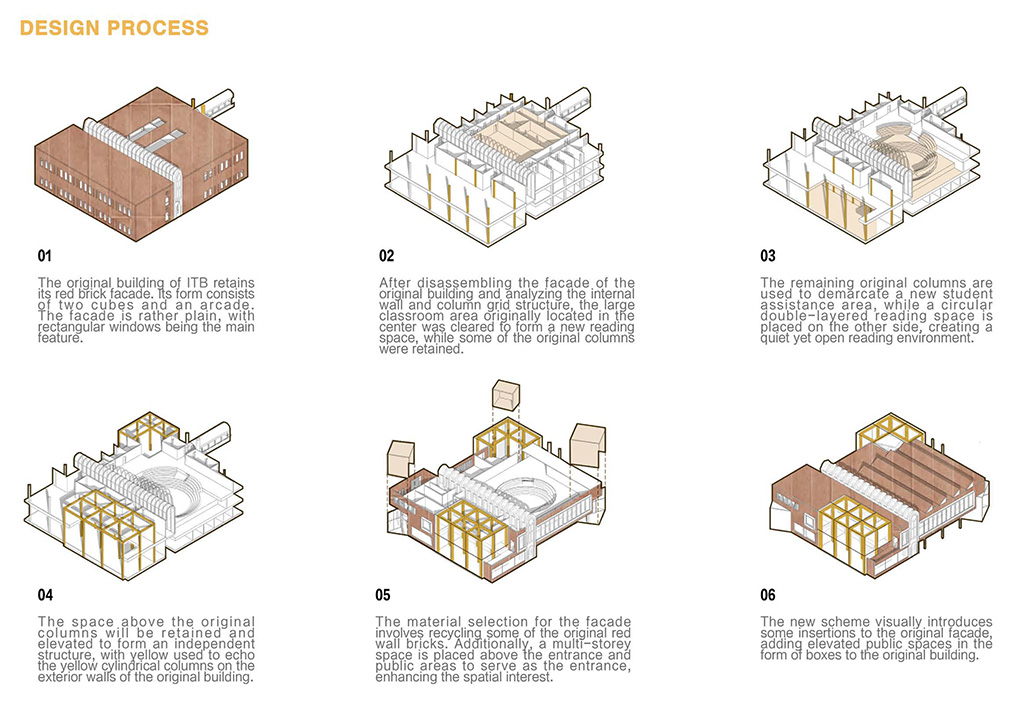
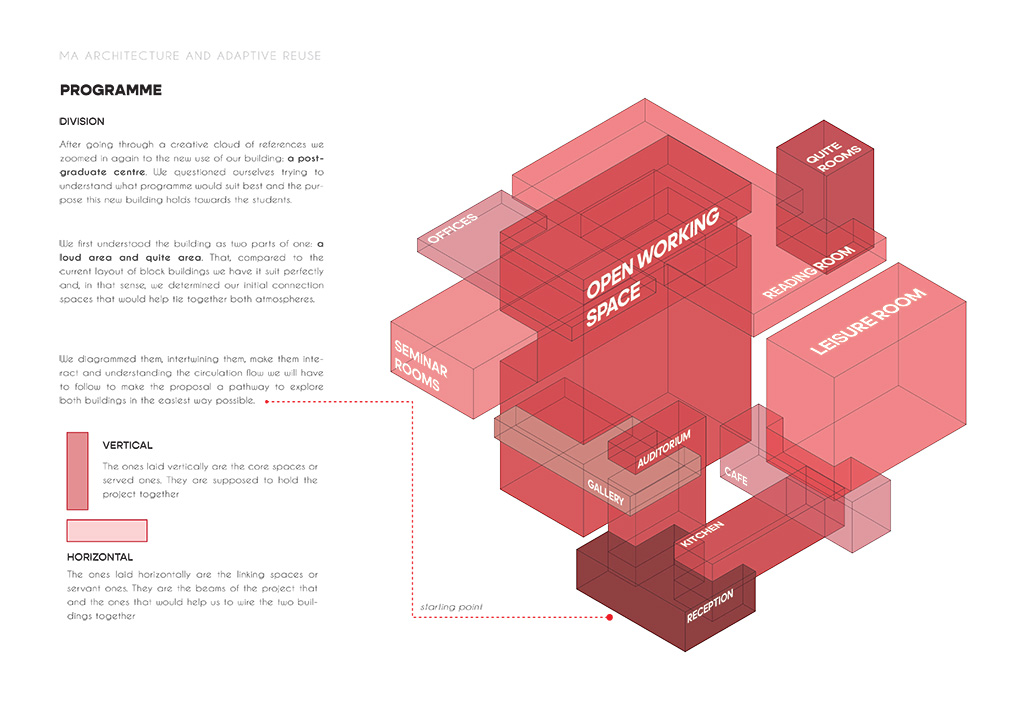
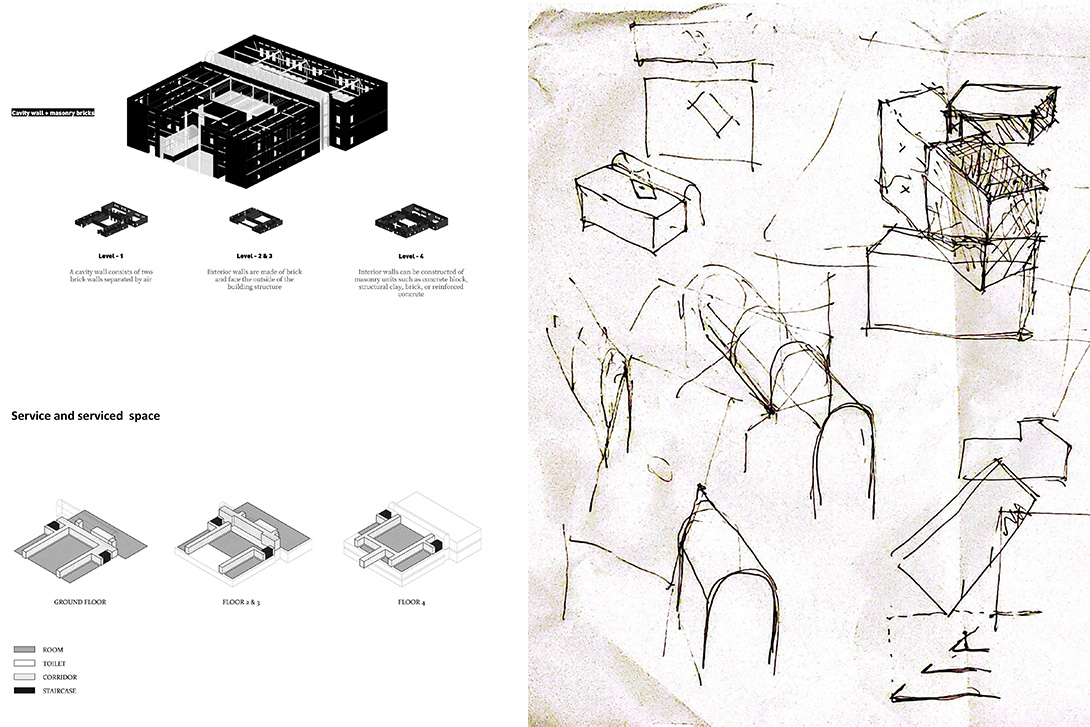
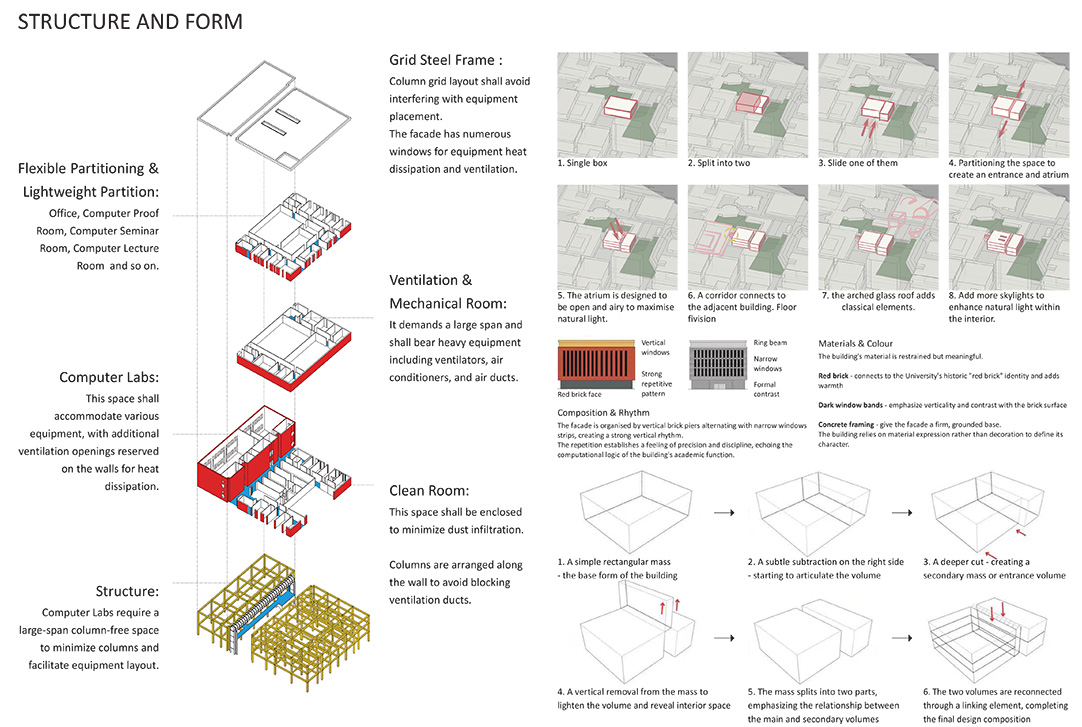
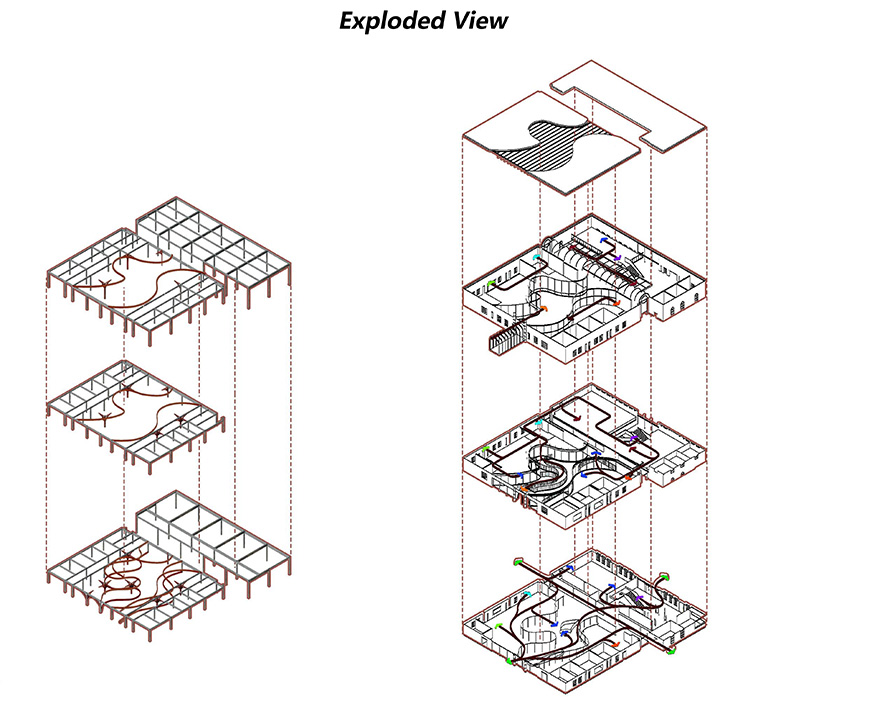
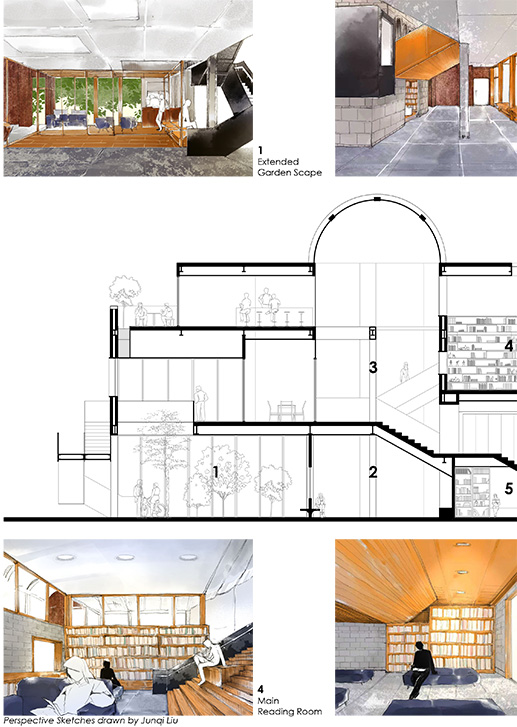
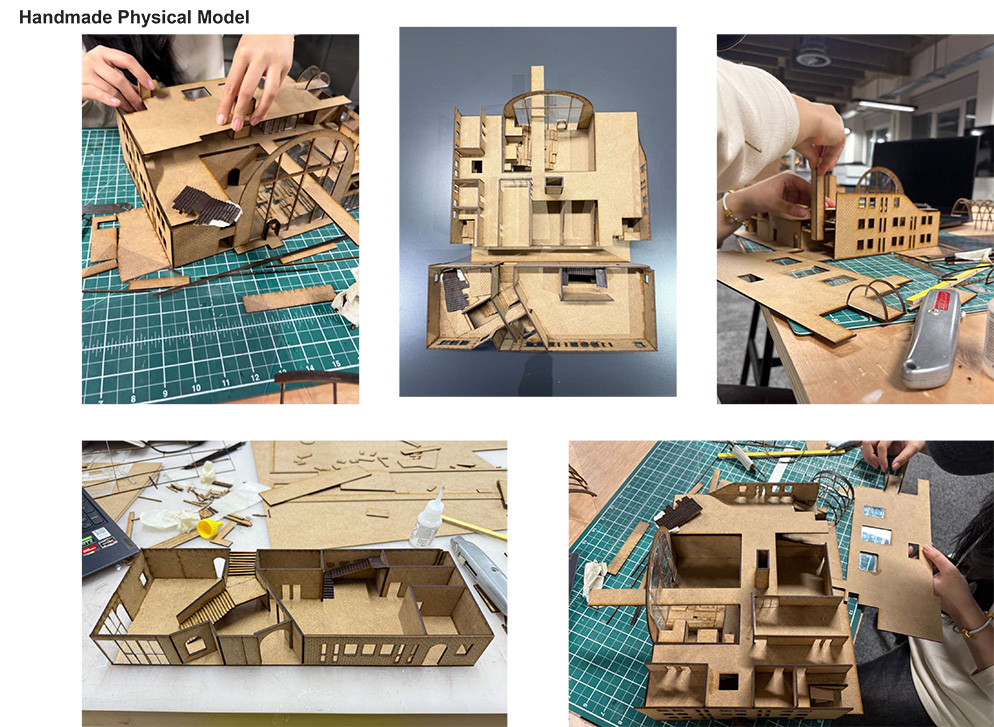
MA Architecture and Adaptive Reuse is a programme about existing buildings, situations and places, and how over time these structures and locations can be encouraged to evolve, sustain new uses, and accommodate new users.

Adaptation is now at the forefront of architectural practice; two of the most pressing challenges in the 21st century are climate change and urbanisation. To reuse an existing building is an inherently sustainable action. Given that already more than half of the global population live in urban environments, and by 2050, it is projected that over 70% of the world population will live in cities, all societies need to be able to accommodate growth while at the same time, reducing consumption. The existing building stock needs to become both more efficient and more resilient.

The world can no longer support continued horizontal development that uses precious resources for both construction and functional use. It is important to address the future of the built environment by looking at different approaches and acting in a more carbon friendly manner. One of the most environmentally kind approaches to the development of the built environment is through building adaptation. Building reuse, refurbishment and restoration work all contribute towards the development of the existing situation, making it useful and appropriate for an expanding and changing population, whose needs and attitudes are also rapidly evolving.

Students investigate and interpret architecture and reuse; they explore aspects of history and memory, and the influence that these have on remodelling activities. They look at the impact that context and the environment have upon projects, while developing an understanding of technical issues including construction, environmental control, and materials in order to make creative and appropriate proposals for new users of the buildings and situations. Students also examine specific examples of adaptive reuse, theories of reuse and explore strategies for the conservation and adaptation of the existing environment.

Current work

Concepts

Concepts module

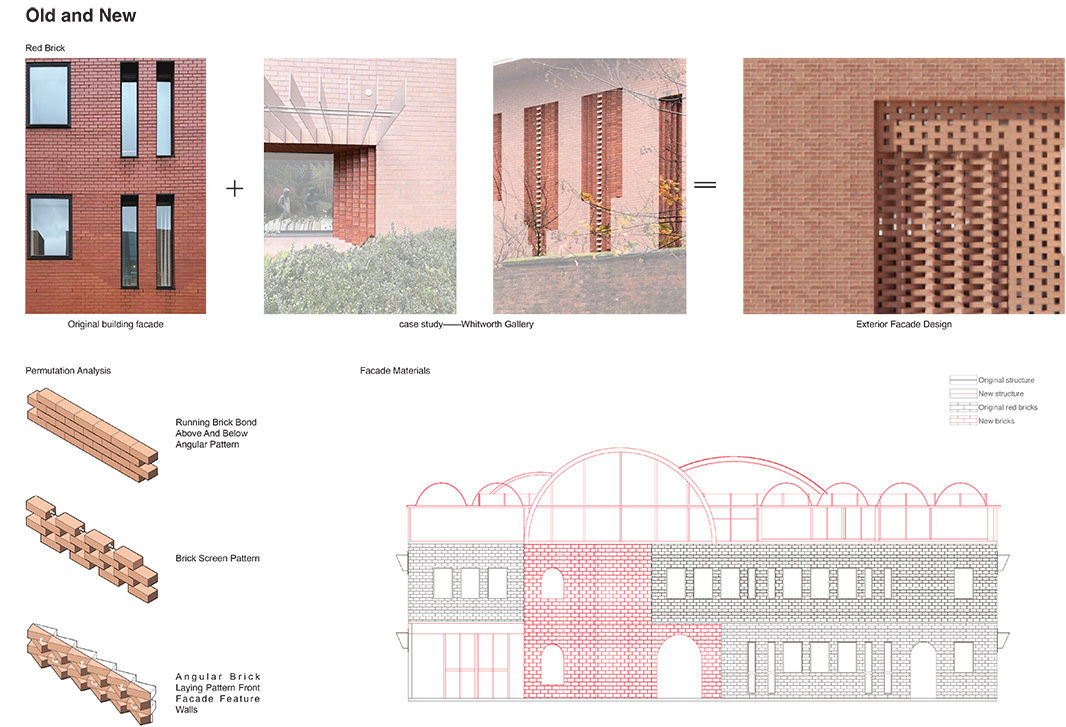
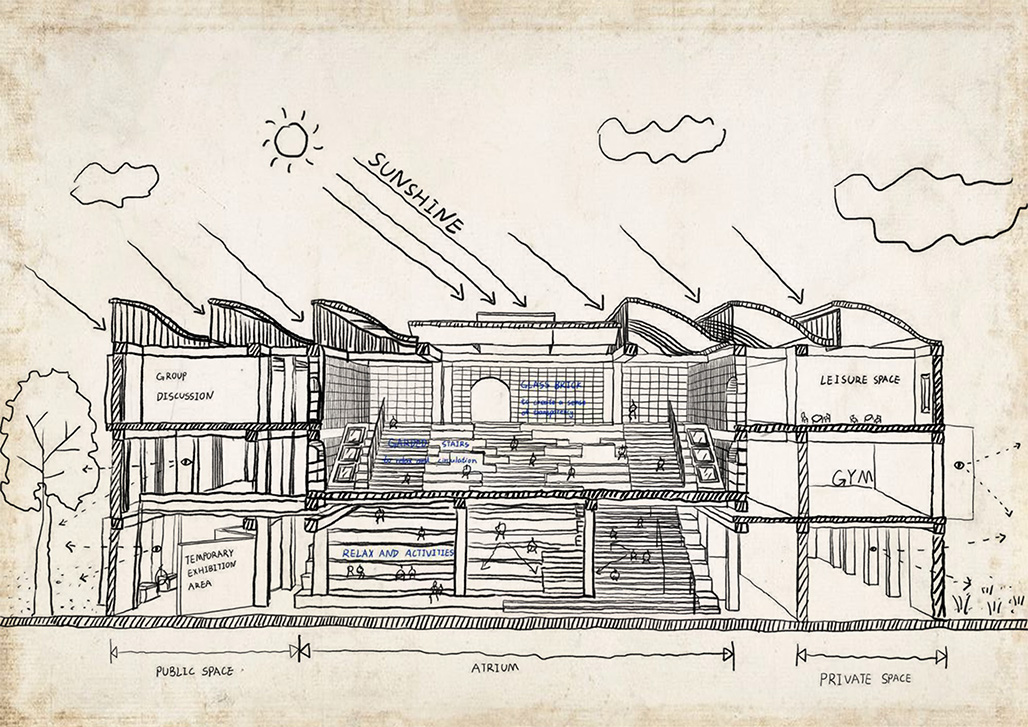
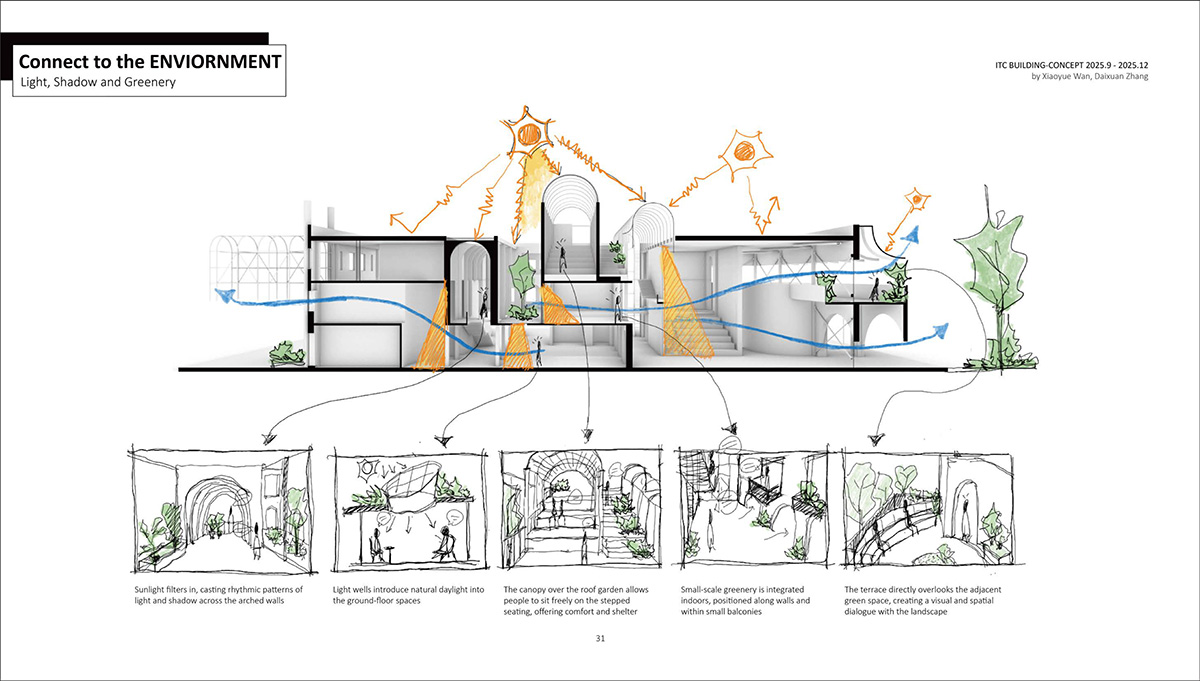
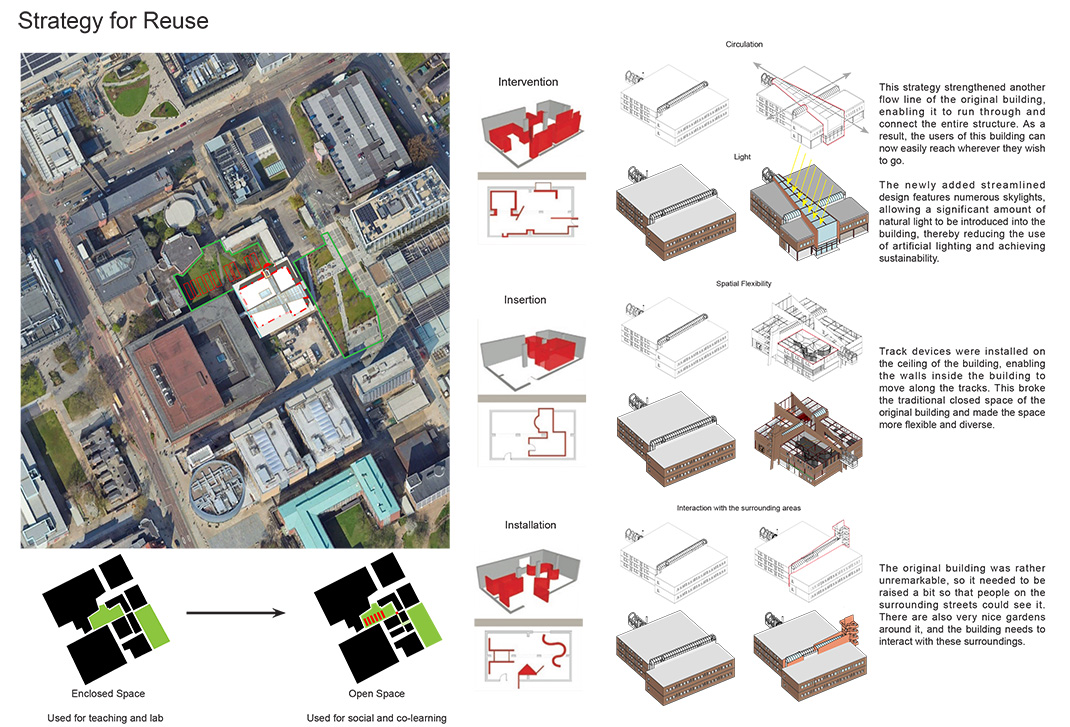
The first module of the academic year is called Concepts, and this module introduces the key principles and issues within adaptive reuse.  The ideas and theories combined with the technologies and inherent sustainability of the subject are discussed, and from this the students develop a research informed project that reflects the symbiosis between design practice and theory.

The module acts as a foundation to the subject. The students study significant precedents, they are introduced to key technological approaches, and they are encouraged to understand the strategically important contribution that adaptive reuse makes to the sustainable redevelopment of the built environment. Students investigate the strategies for adaptive reuse - strategies that are not applied as a reaction to current conditions, but in anticipation of future changes.

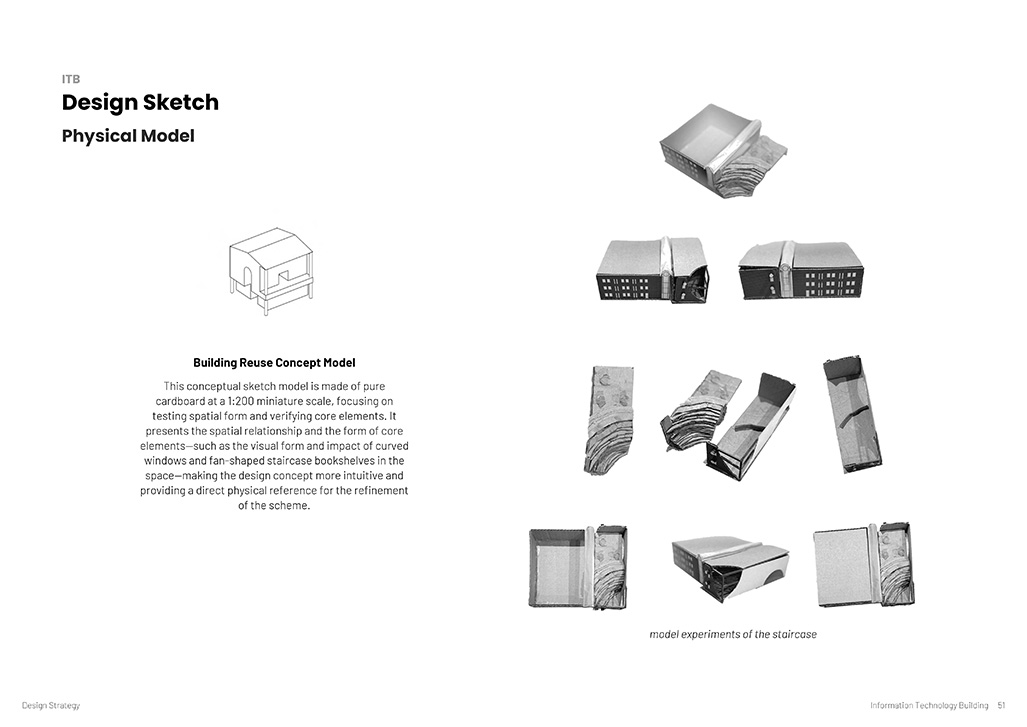
Traditional research techniques are applied and understood, and these are complimented by a research-through-design project. All students complete the same adaptive reuse project with the same client. This project is necessarily efficient. The students are guided through the strategic stages of a design project – from the investigations and analysis of the context, the understanding of the client’s needs and aspirations, the deliberate design approaches, to the careful detailing of materials and junctions. These are the same processes that are applied in the second and third trimester Thesis Project.
Research methods

Research Methods Workshop

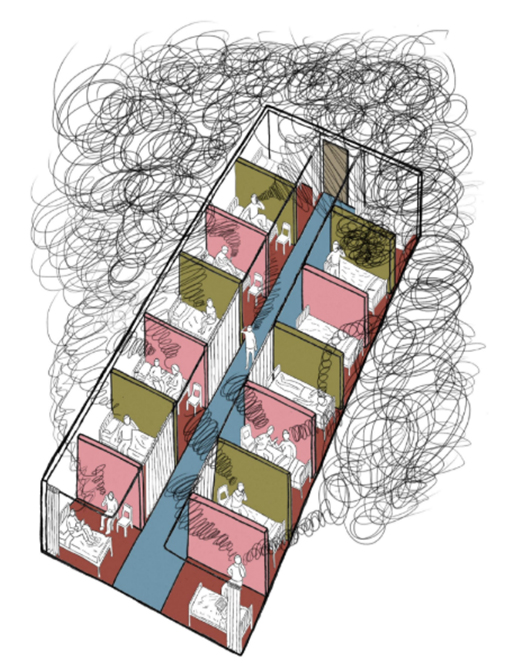
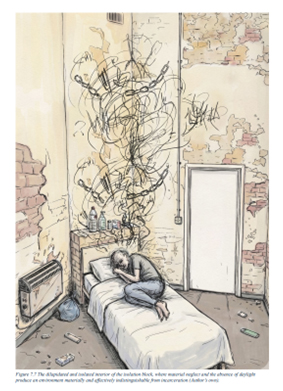
Across the Research Methods Workshop module, research is understood broadly and experimentally. Students are encouraged to develop their own lines of enquiry in relation to their academic interests, professional ambitions, and personal backgrounds. Workshops may involve archival research, mapping, diagramming, oral history, actor-network theory, model making, critical reading, visual analysis, site visits, and engagement with external partners. This variety allows students to understand architecture as inseparable from wider questions of politics, economy, history, culture, environment, society, and media.

Teaching is organised through eight in-person sessions, combining Tuesday afternoon classes with an intensive week in February. While workshops may include lectures, seminars, guest speakers, or visits, the module emphasises active participation, collaborative inquiry, and hands-on research development. The principal outputs are a group visual essay that combines research questions with methods statement and curated visual material, and an individual annotated bibliography and personal reflection. Together, these components ask students to articulate a coherent research narrative, reflect critically on method, and translate their findings into a written and visual form.

The module equips students with the skills to frame research questions, analyse sources critically, synthesise evidence, and prepare for further independent work, particularly the dissertation. It also culminates in an exhibition of student work, reinforcing the public and communicative dimensions of architectural research.

Lecturers:

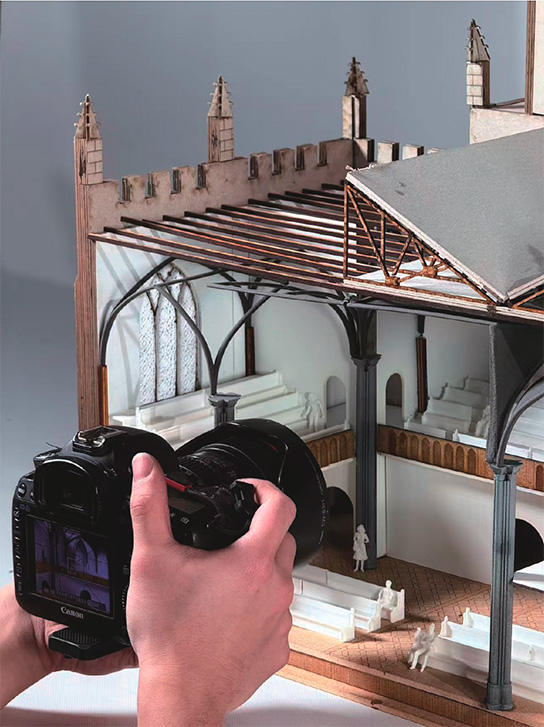
Image 1
“Matthew's Campfi eld Church, By Charles Barry”
RMW Workshop 09: Schinkel in Manchester 2.0
Lecturers: Eamonn Canniffe, Sally Stone, Scott Miller
Students: Han Liu, Jingyi Lyu, Yiyu Wang, Yiyao Liu

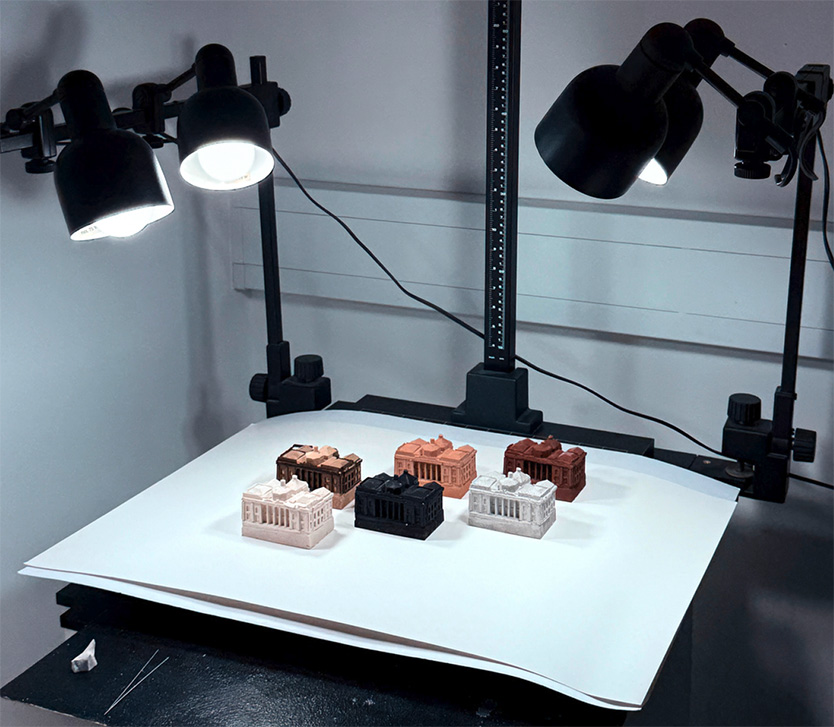
Image 2:
“Old Town Hall”
RMW Workshop 09: Schinkel in Manchester 2.0
Lecturers: Eamonn Canniffe, Sally Stone, Scott Miller
Students: Yang Xiao,Yiding Xie, Mingze Yang,Jiayu Liu

Image 3:
RMW Workshop 05: Climate Proof Cities? Challenging Urban Resilience
Lecturer: Angela Connelly
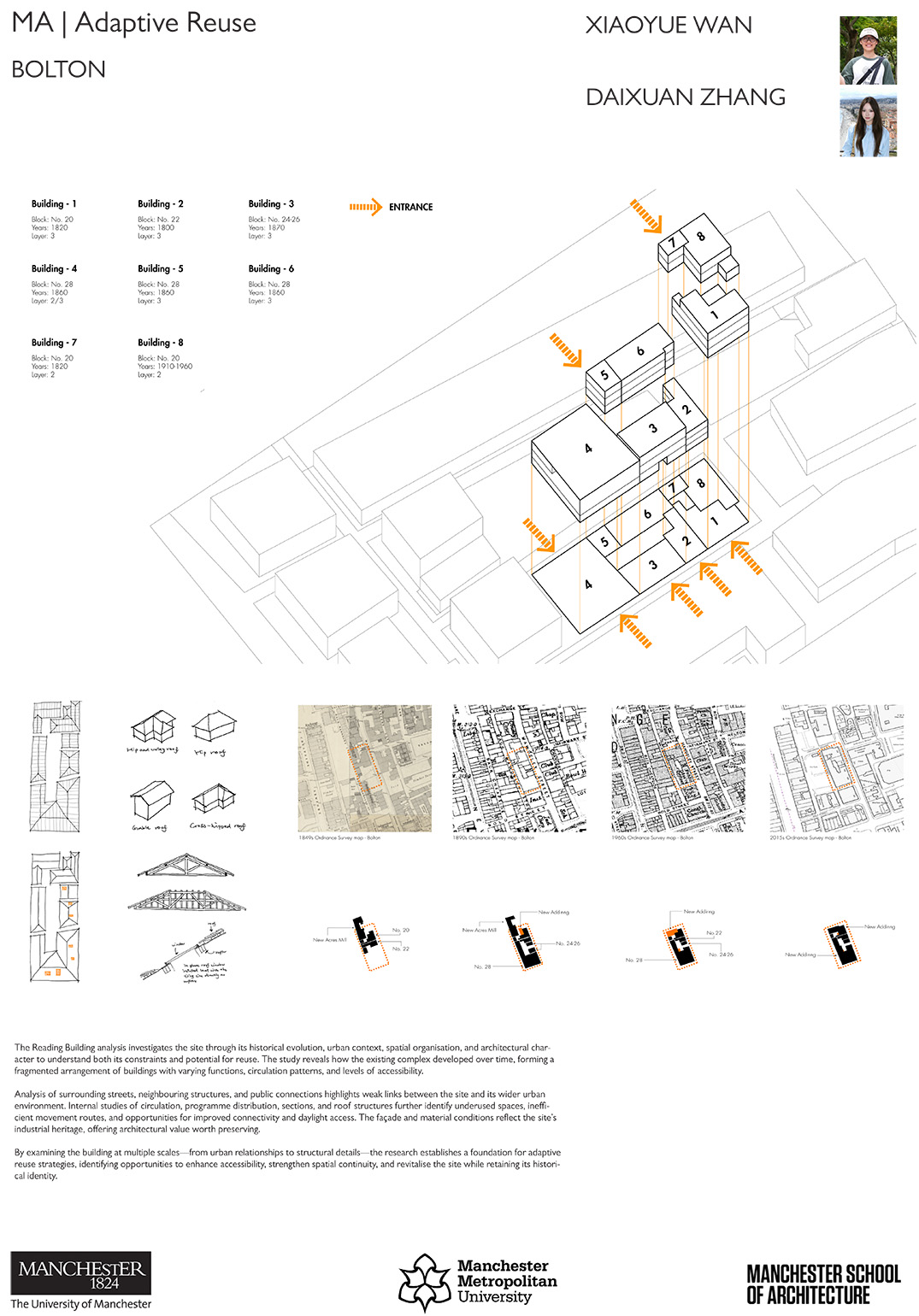
Students: Shiya Zeng, Xiaoyue Wan

Thesis project

Thesis project

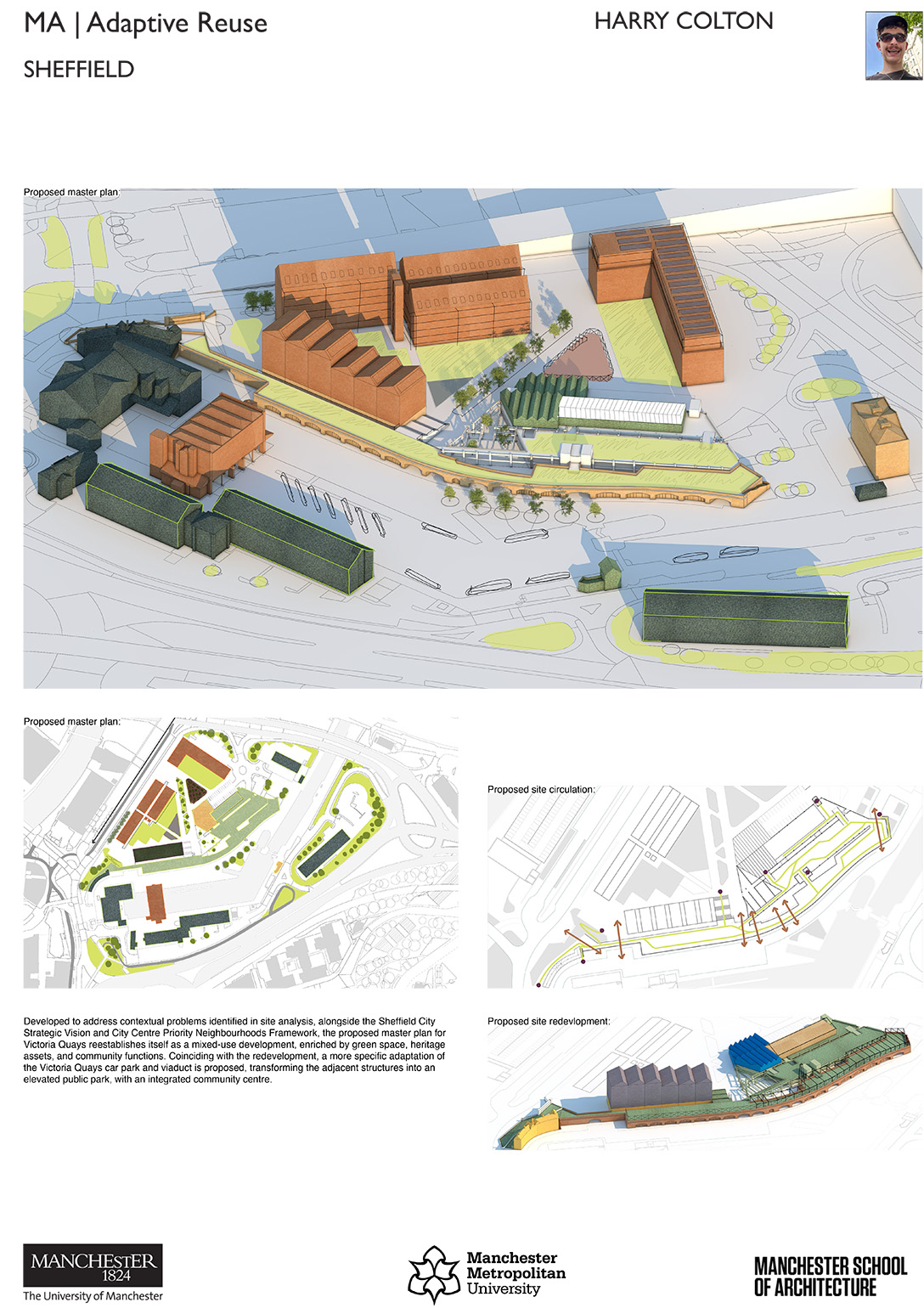
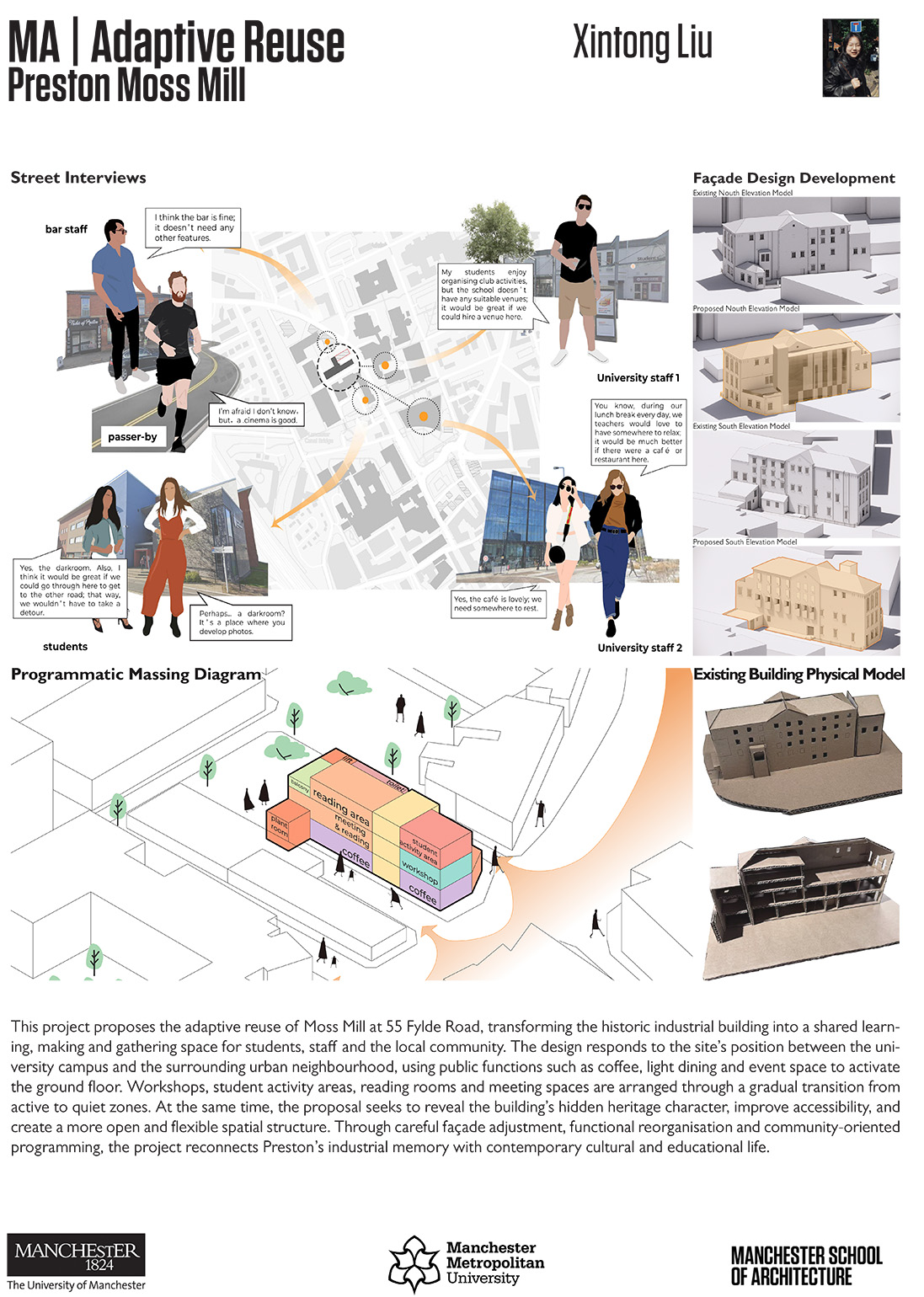
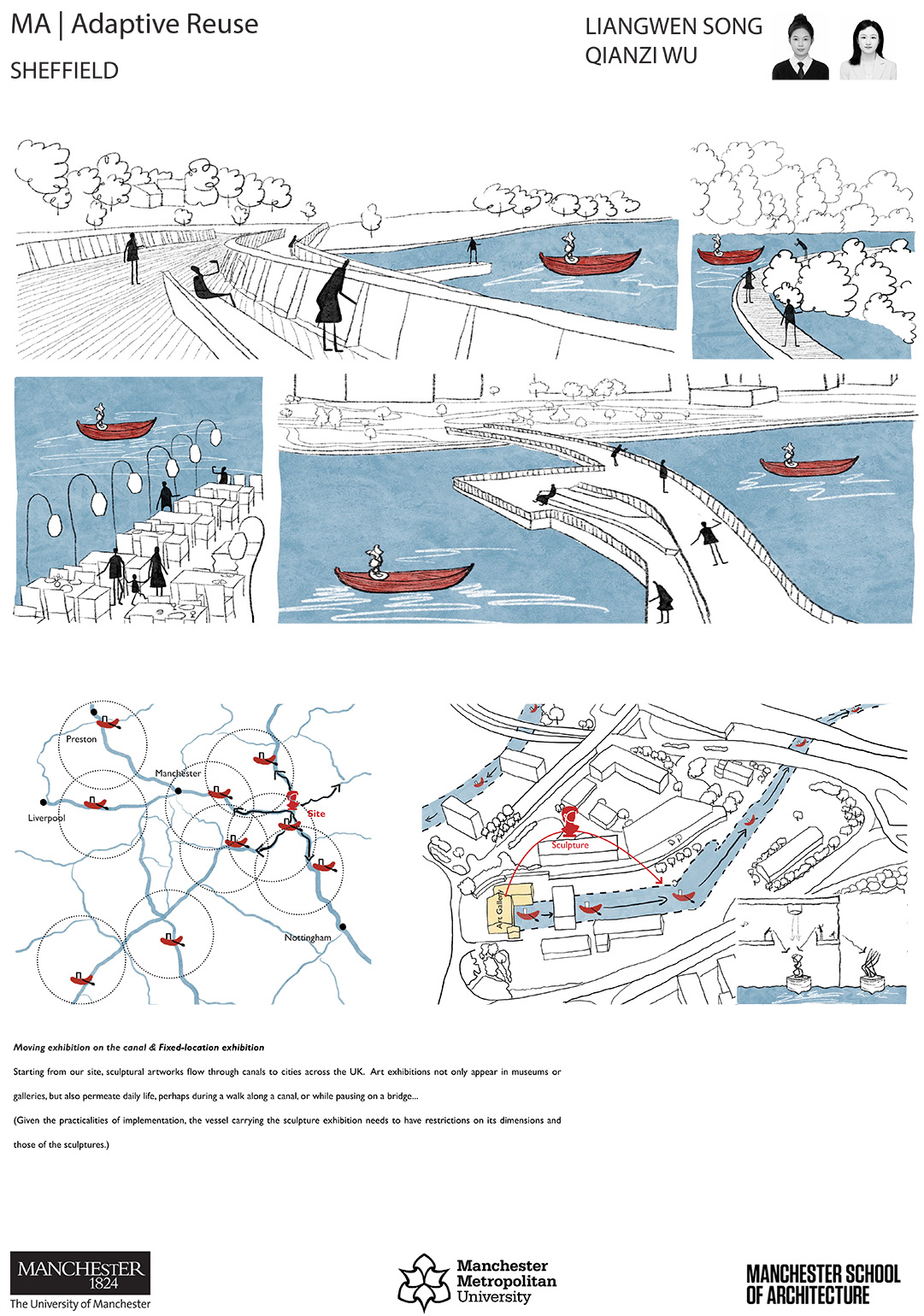
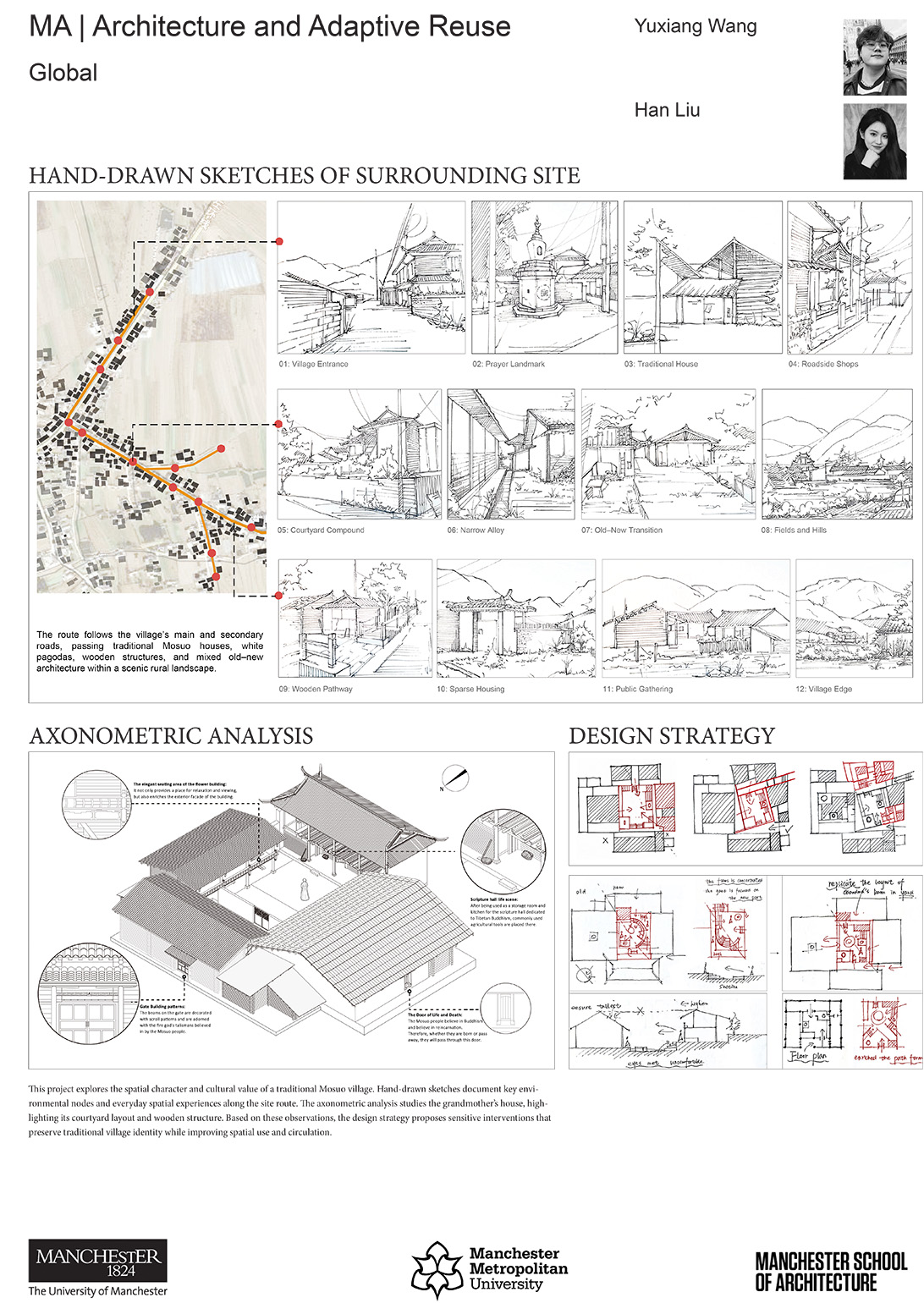
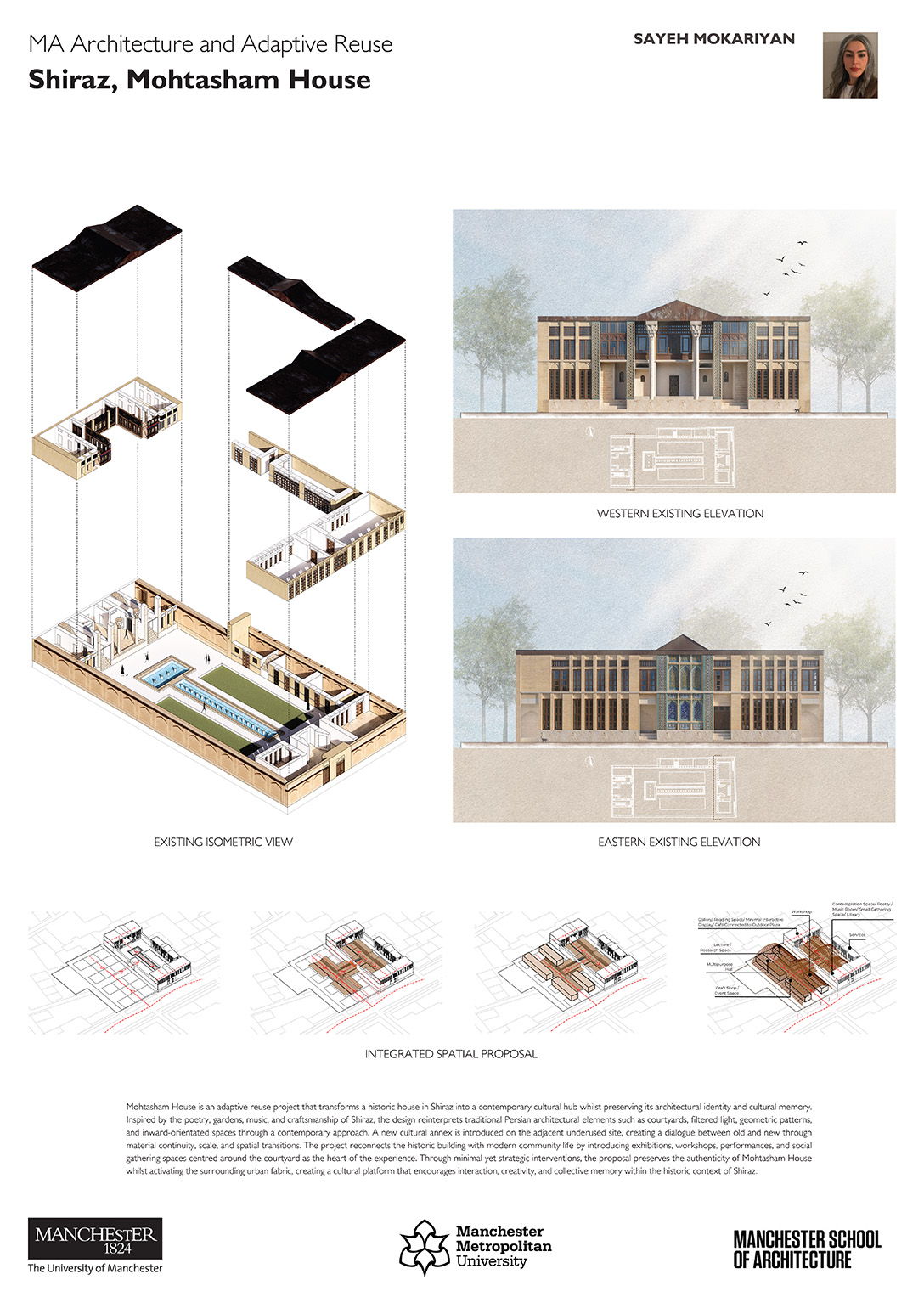
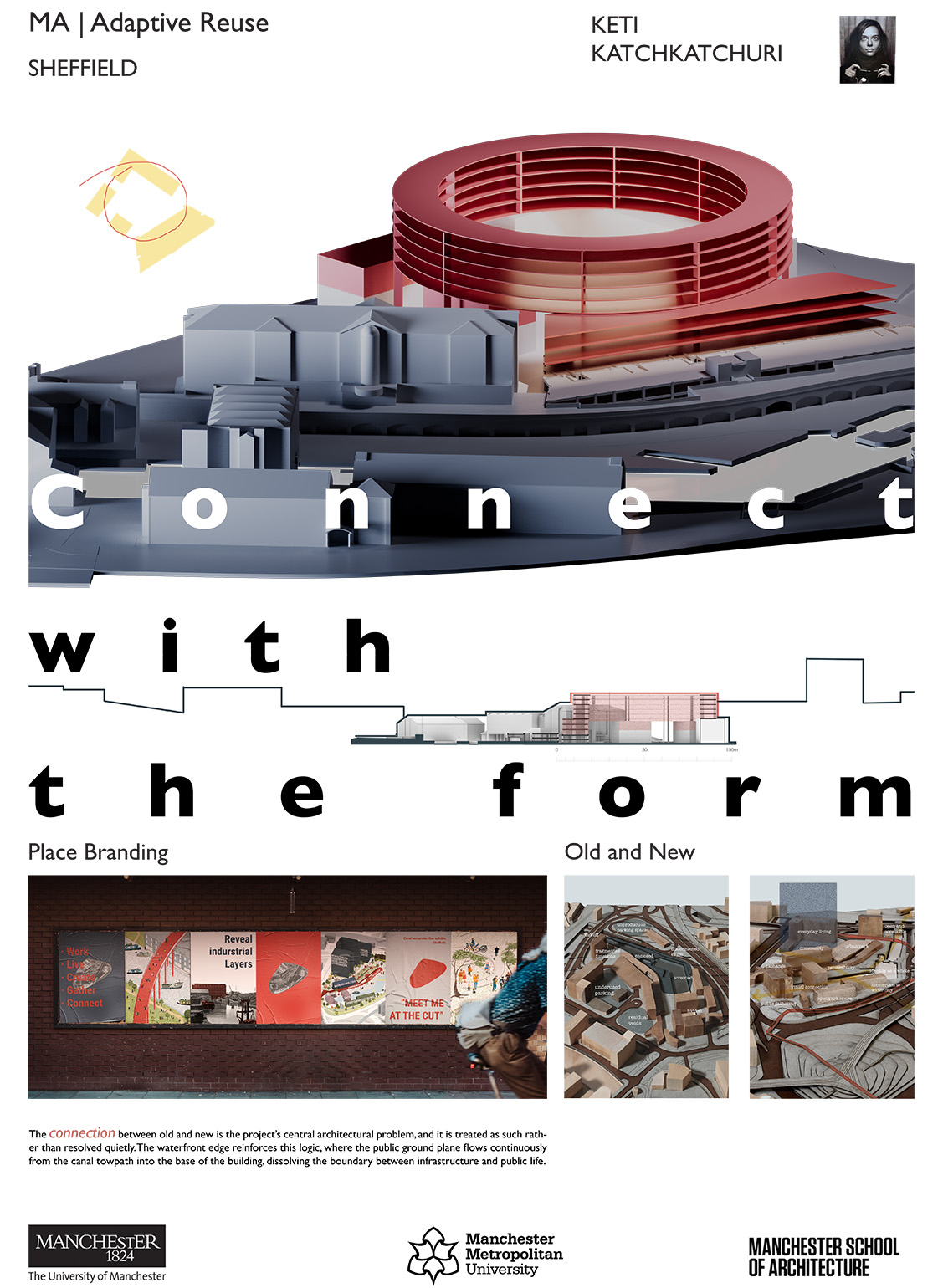
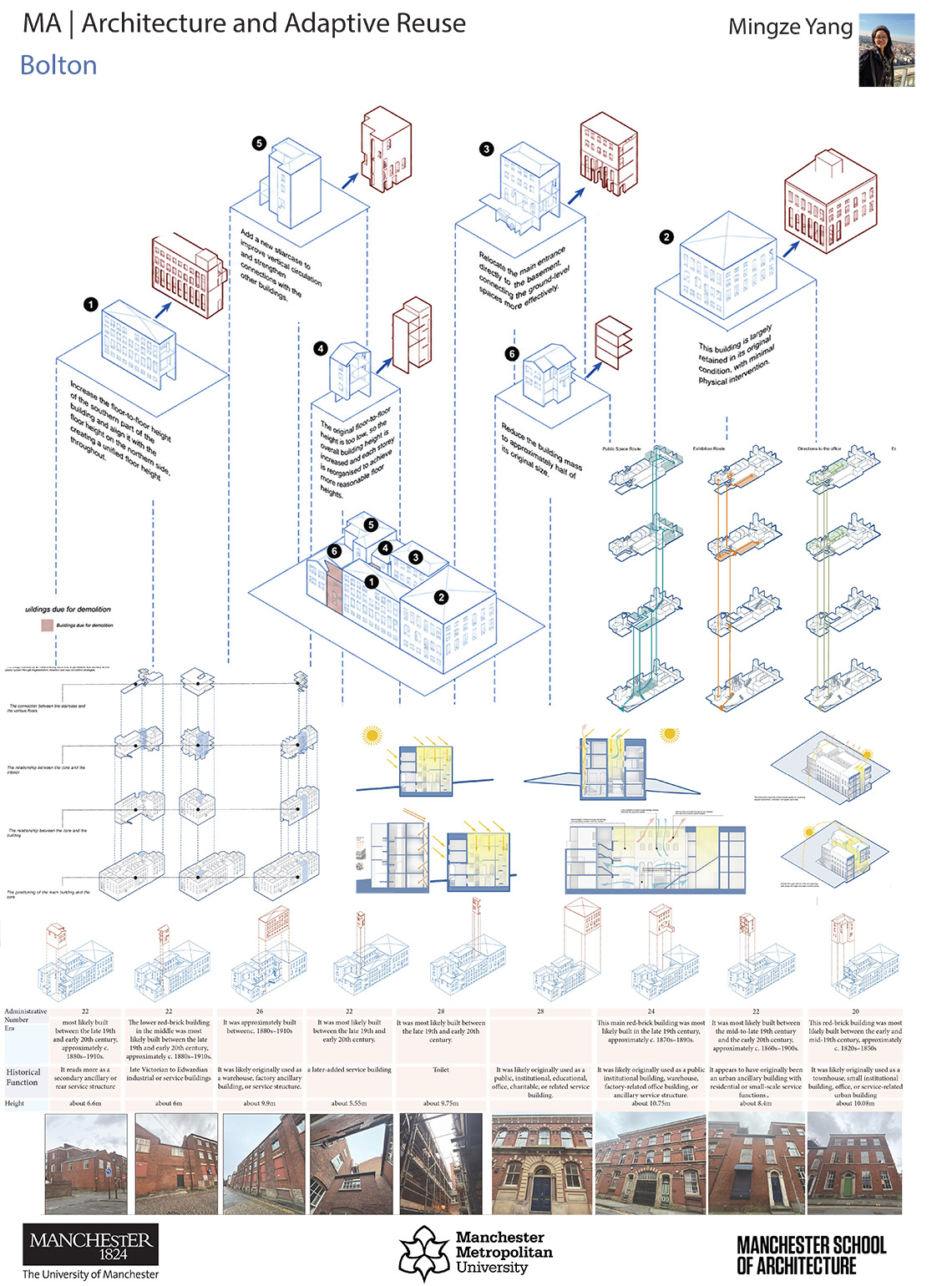
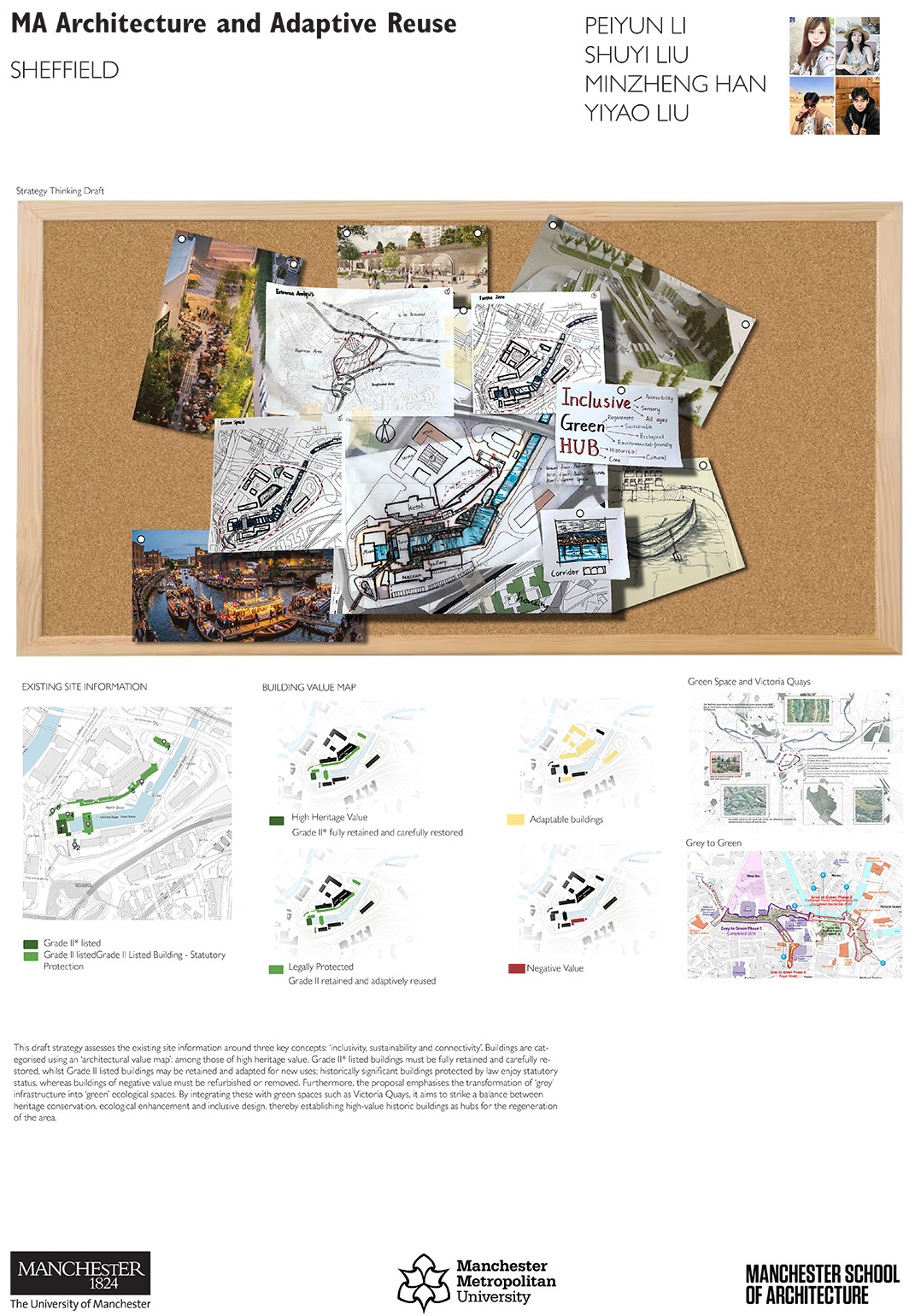
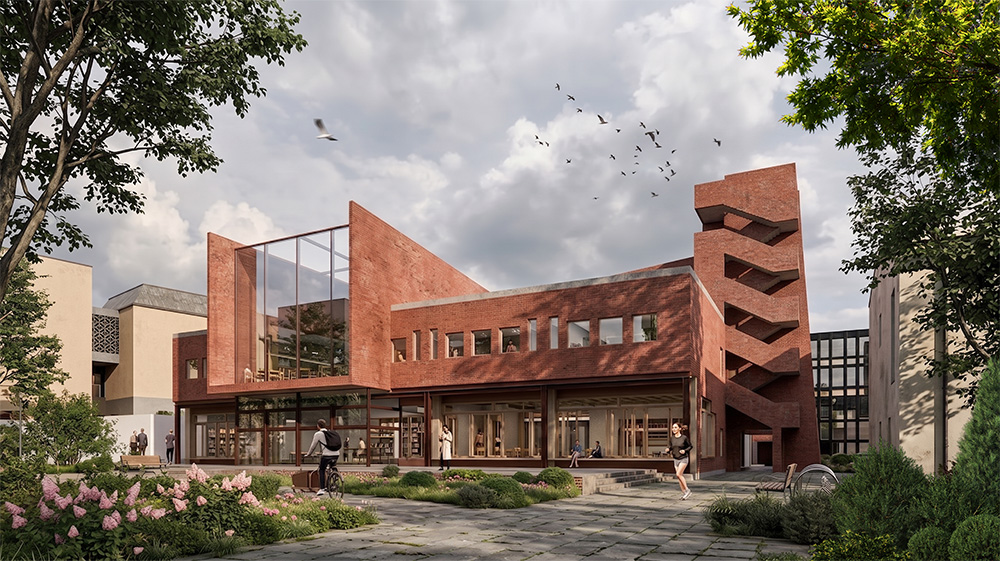
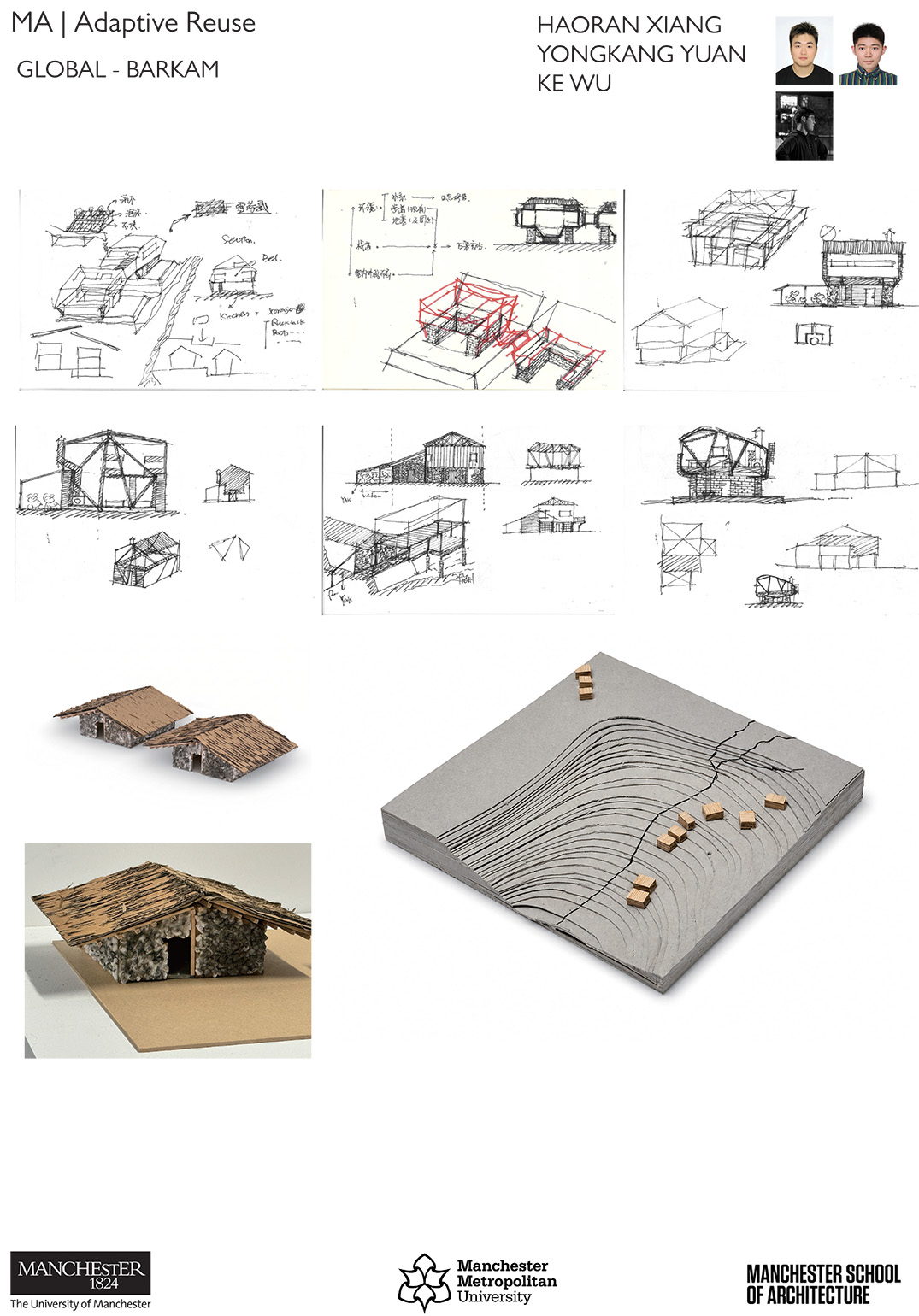
The Thesis project lasts for two trimesters; it starts in January and runs until the end of the academic year. In these modules, the student completes a self-chosen adaptive reuse design project. This builds upon the skills and knowledge that have been acquired in the Concepts project. Two DOMAINS are offered: Global and Local. Students can self-select their own global site or sites, place(s) or situation(s) for investigation, while the programme staff provide the local site. Academic staff fully support the process of selection of the vehicle for investigation.

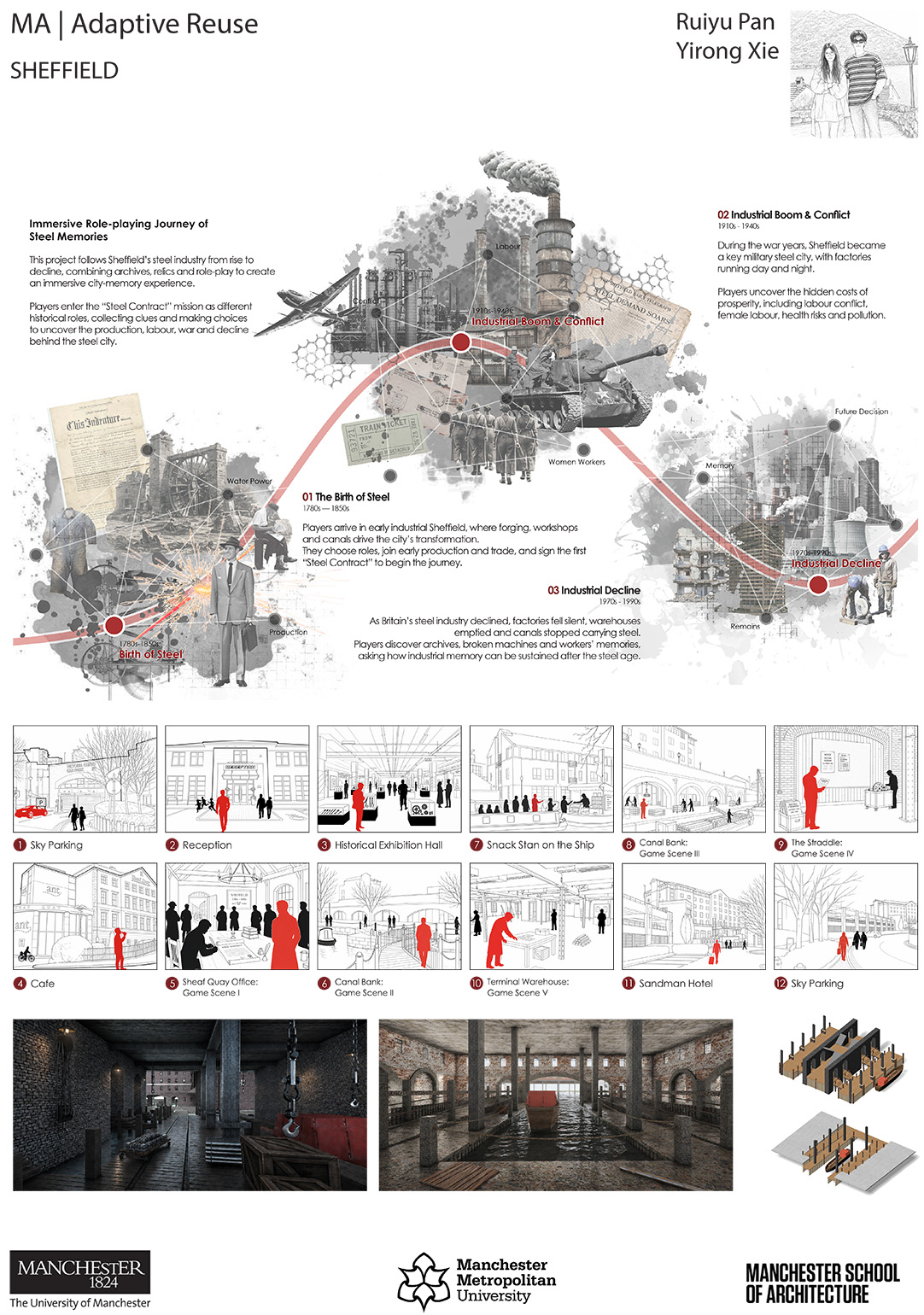
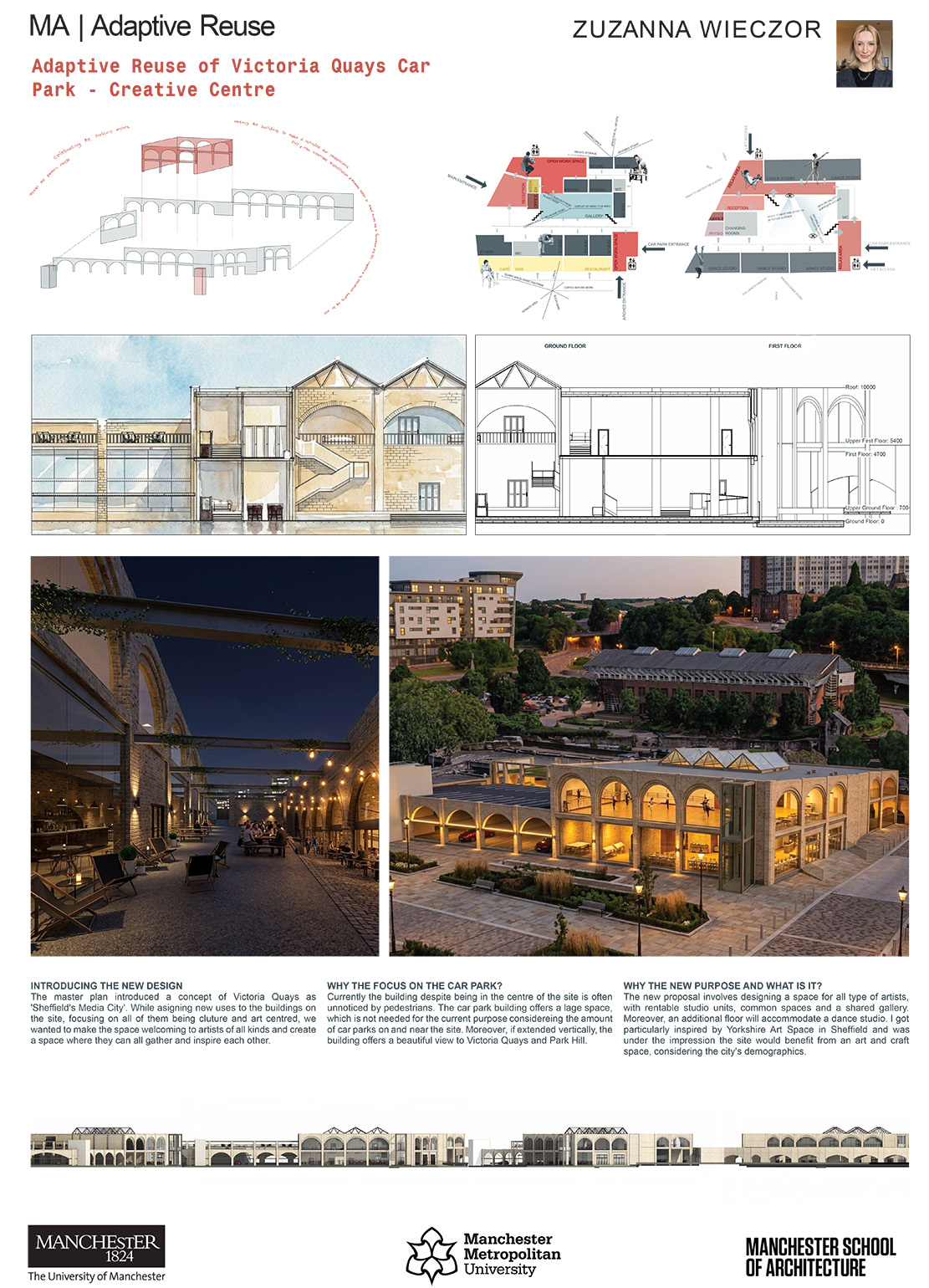
So, students can elect to design an adaptive reuse project in their own country, this allows them to reflect upon the distinct contextual, material, cultural, and climatic properties of their home. Or they can select to design a project in the north of England. This allows them to easily access the site, and students are encouraged to analyse the particular qualities of the area. Two types of UK based projects are offered. The first is a small master-planning project that allows for investigations into contextual relationships within and beyond the site. While the other is a much smaller building that encourages students to experiment with the understanding of materials and the impact of intricate detailing. This year we have been looking at northern English projects in Sheffield, Preston, and Bolton.

Dissertation

Dissertation

The dissertation is an individually written exploration of a well-defined architectural and adaptive reuse research topic which is the result of a self-directed period of research. Through the dissertation the student develops and refines a research question or proposition, develop a suitable methodology and compiles suitable evidence in the service of a coherent and rigorous argument and conclusions.

The final dissertation of 10,000 words is expected to be a piece of research of highest quality, that is theoretically grounded, rigorously conducted, empirically supported, systematically analysed, coherently argued and well-written.

Through the dissertation unit the student will examine architectural and adaptive reuse practice within its wider theoretical, historical, socio-economic and global context. Furthermore, the student will learn how to critically evaluate evidence from a range of sources in the service of the creation of new knowledge.

Supervisor list